

Weight
−72%
Our lightest bridge against the stock part it replaces.
CNC-machined hardware with less weight, precise fit and anodized finishes built for everyday playing.
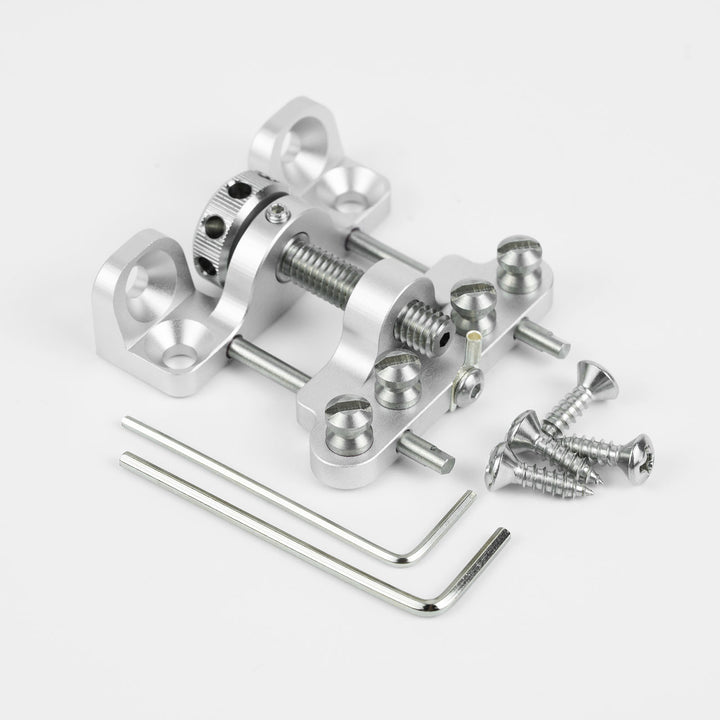
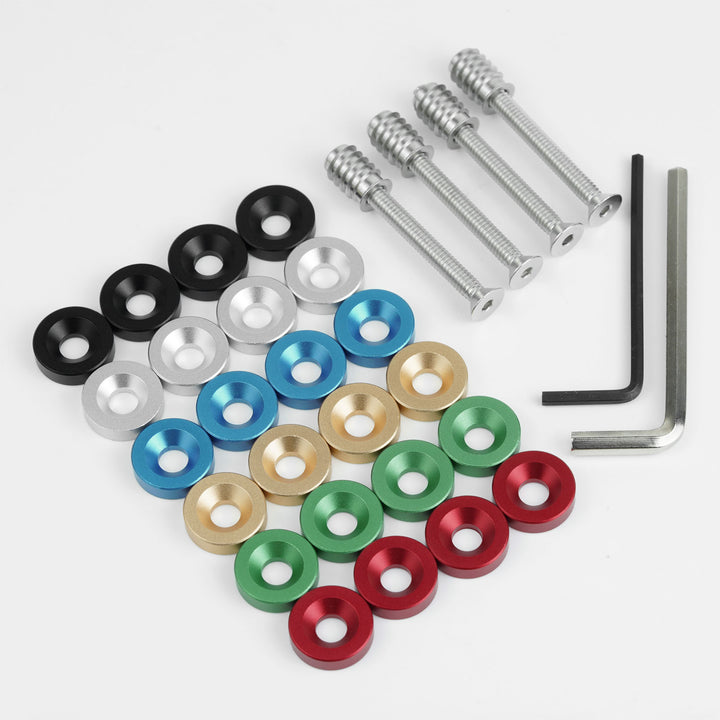
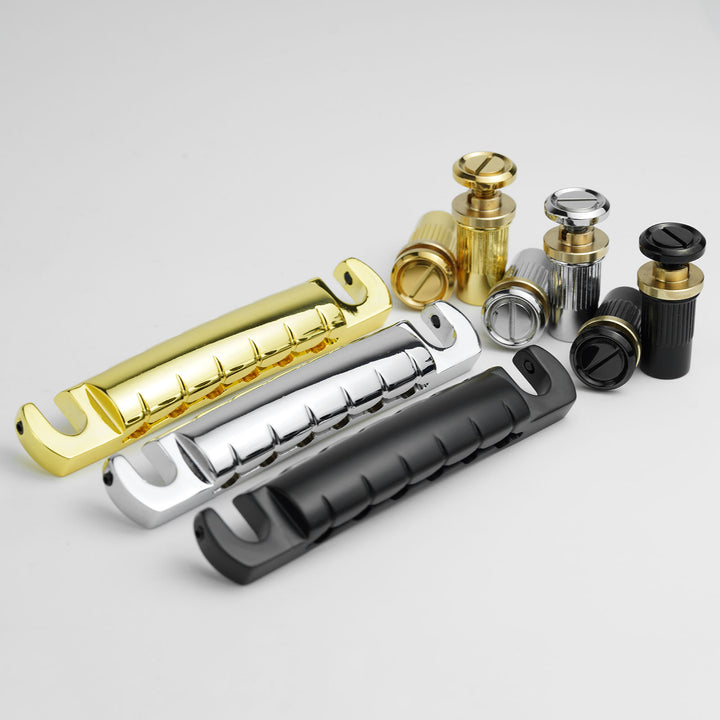
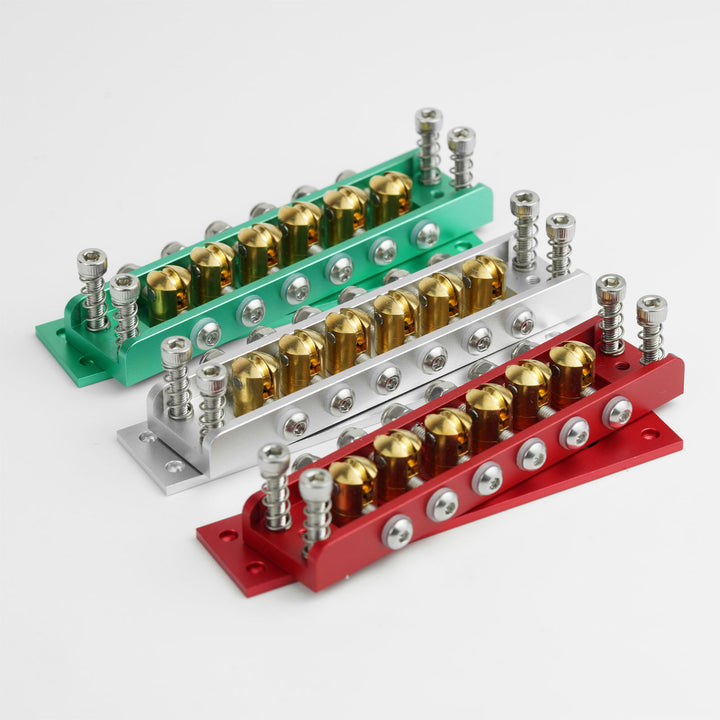
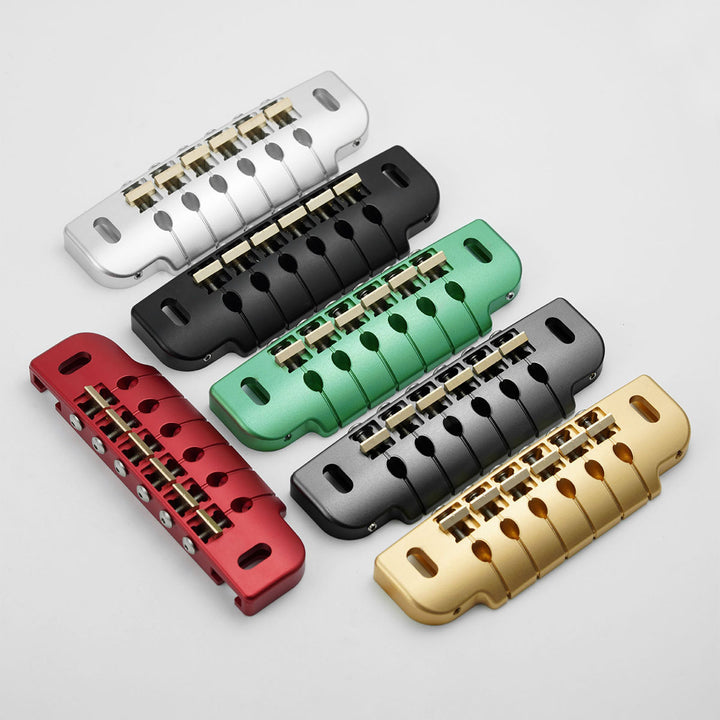
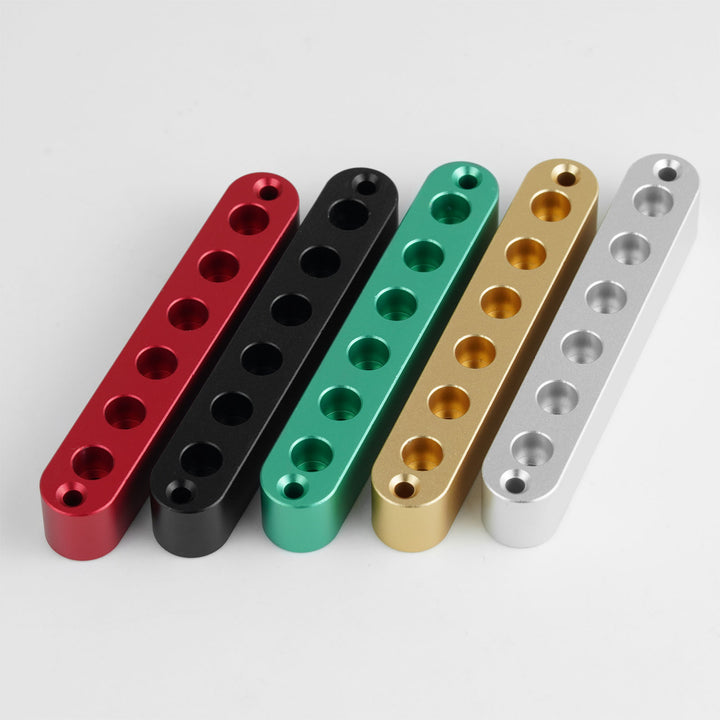
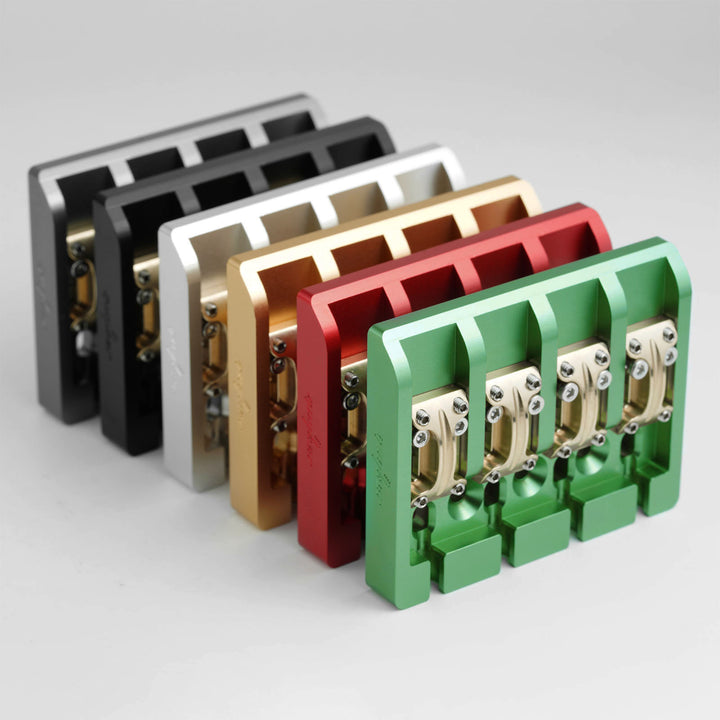
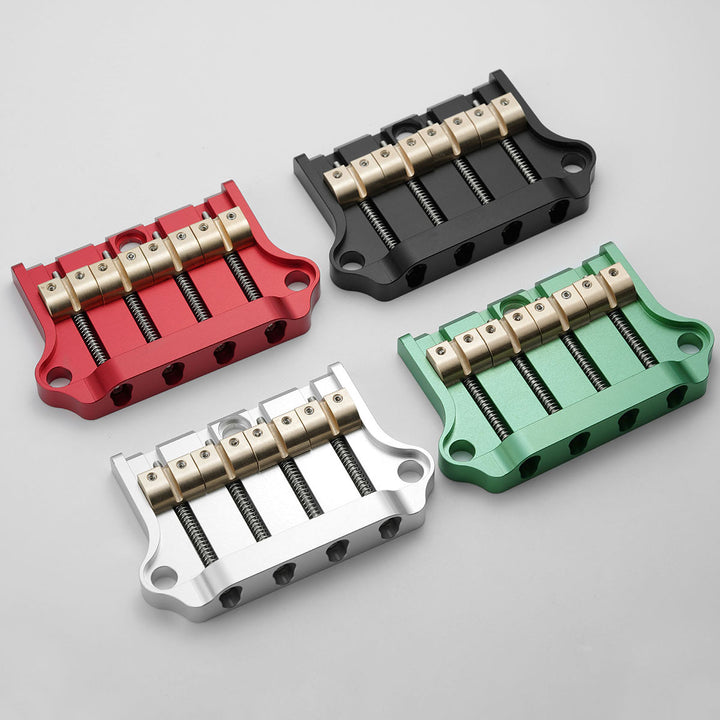
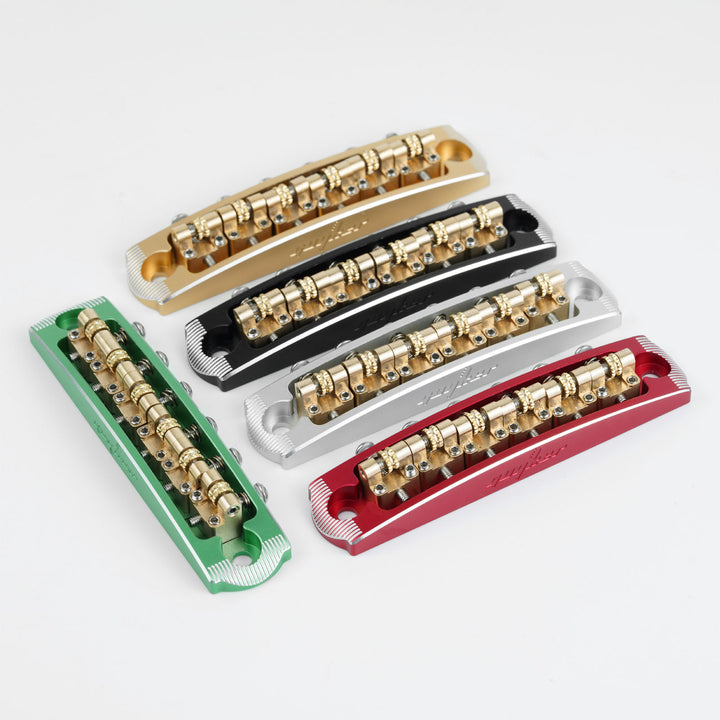
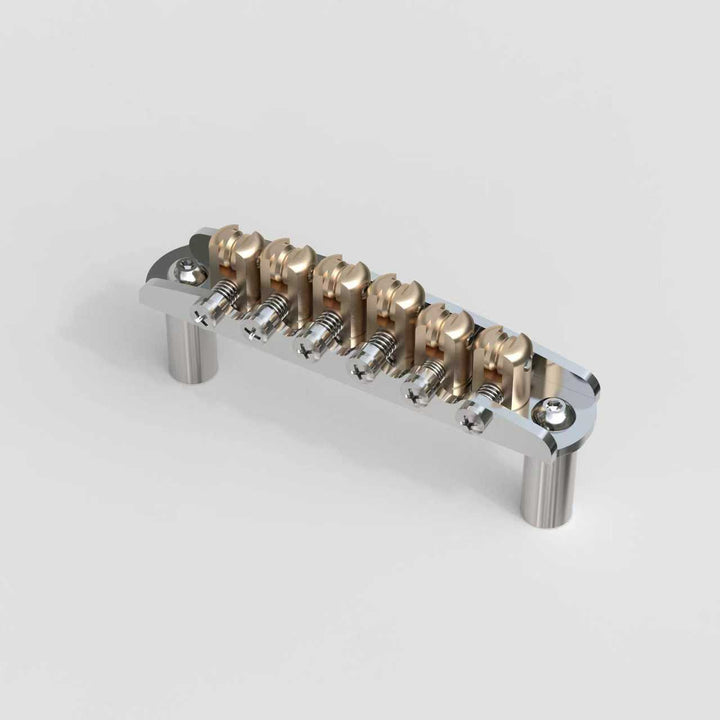
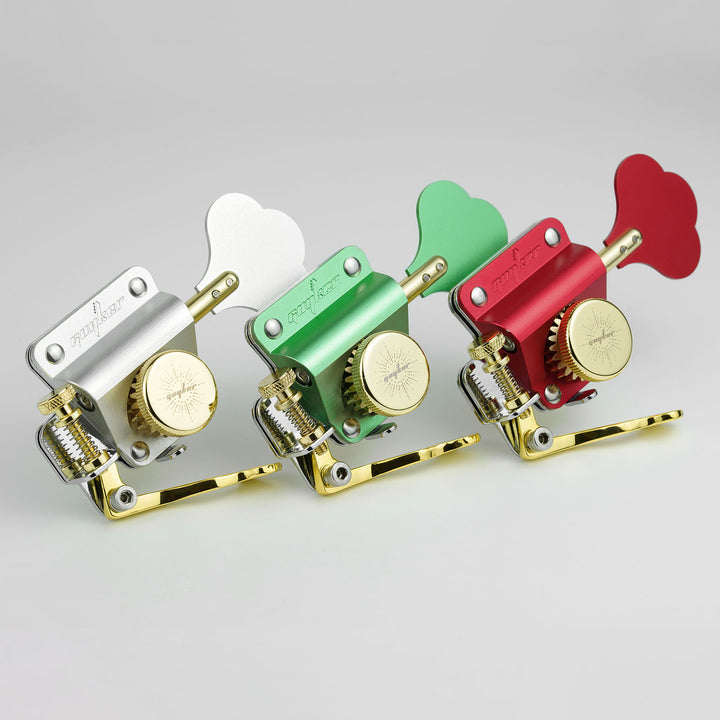
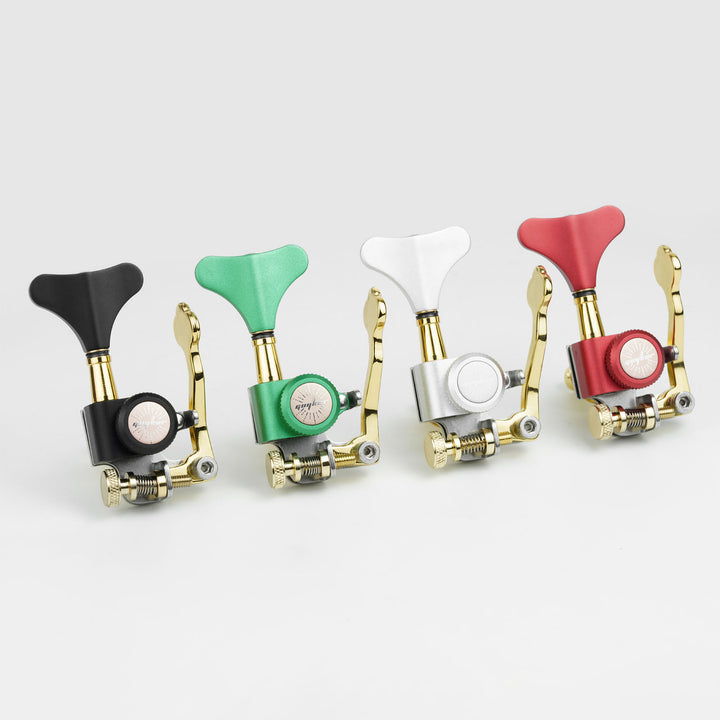
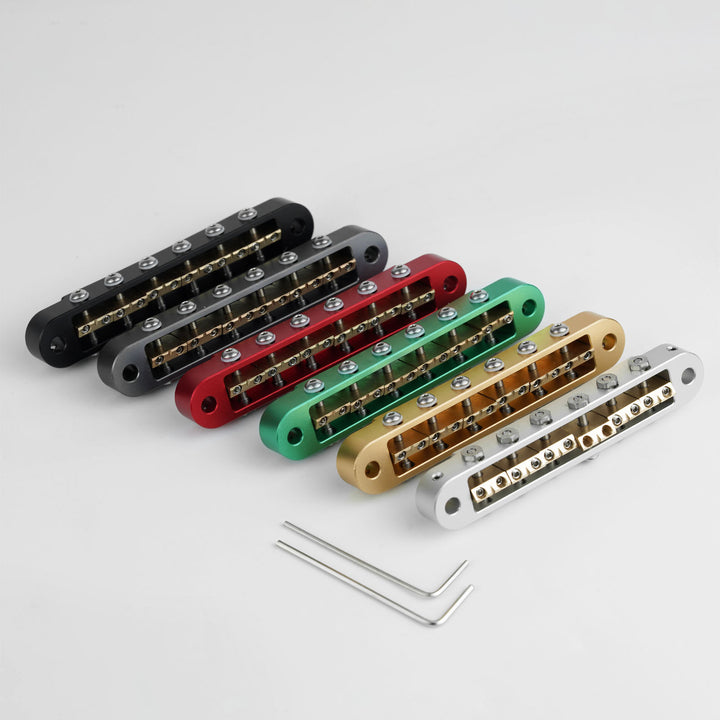
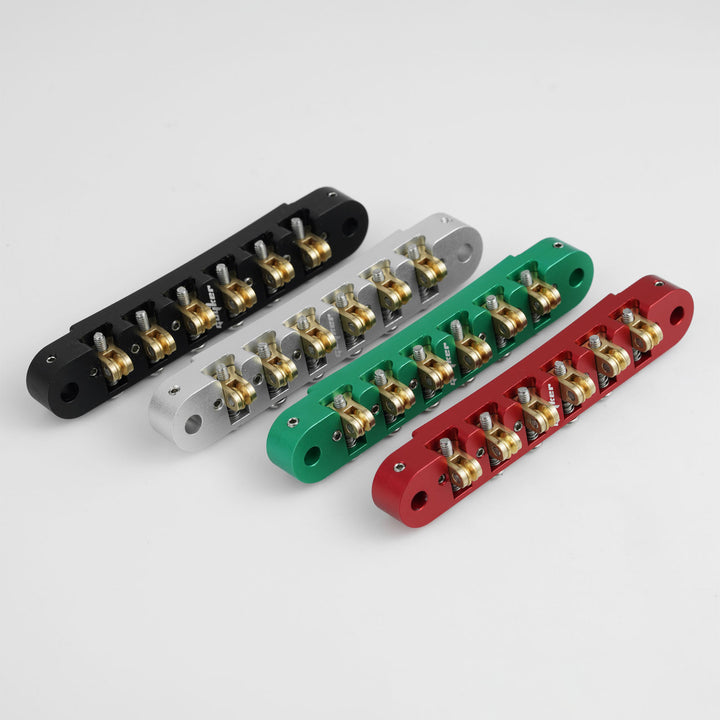
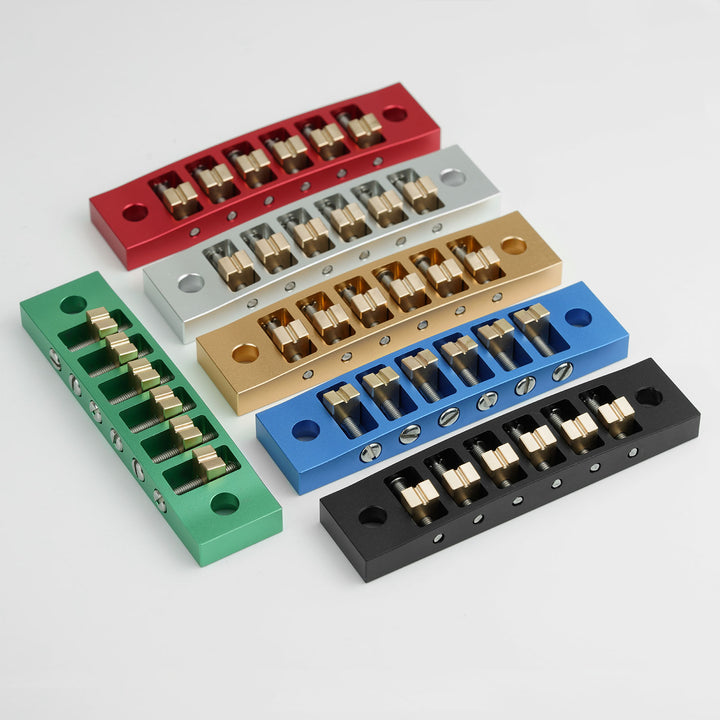
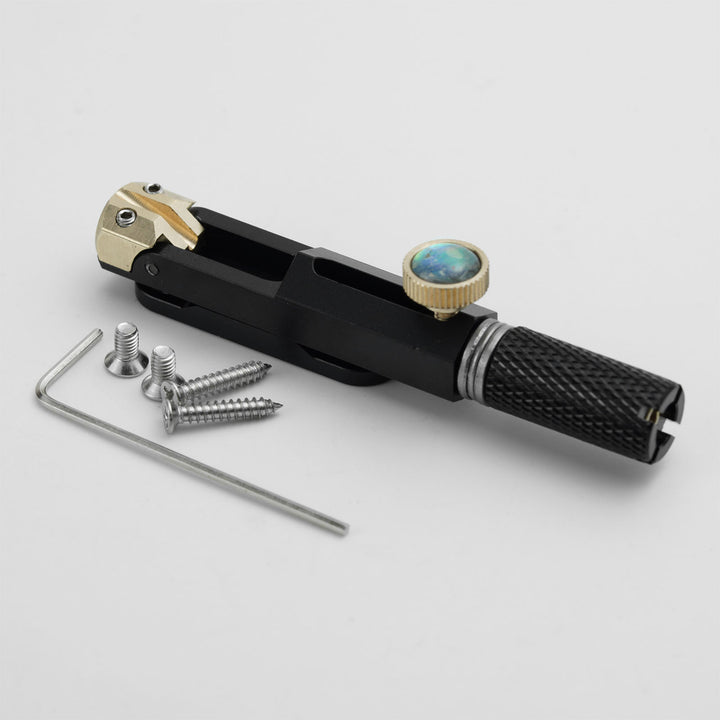
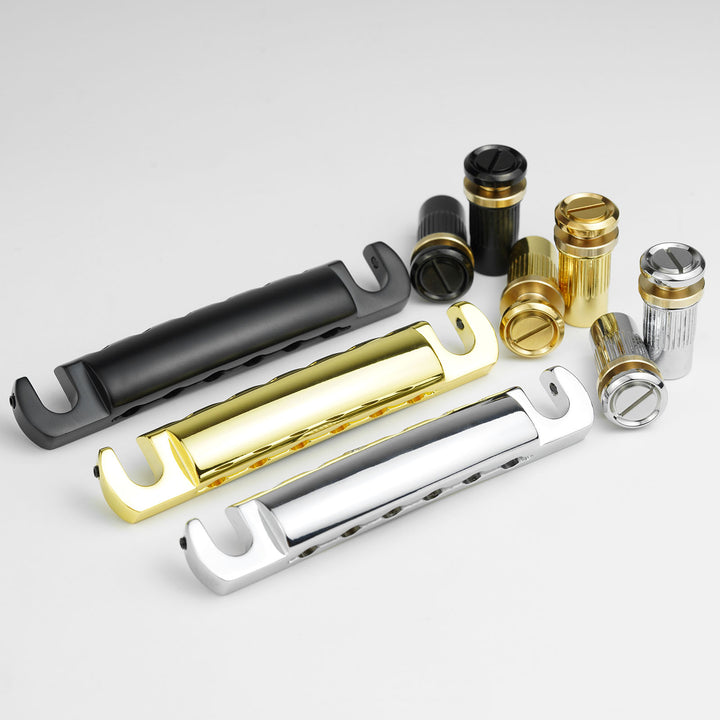
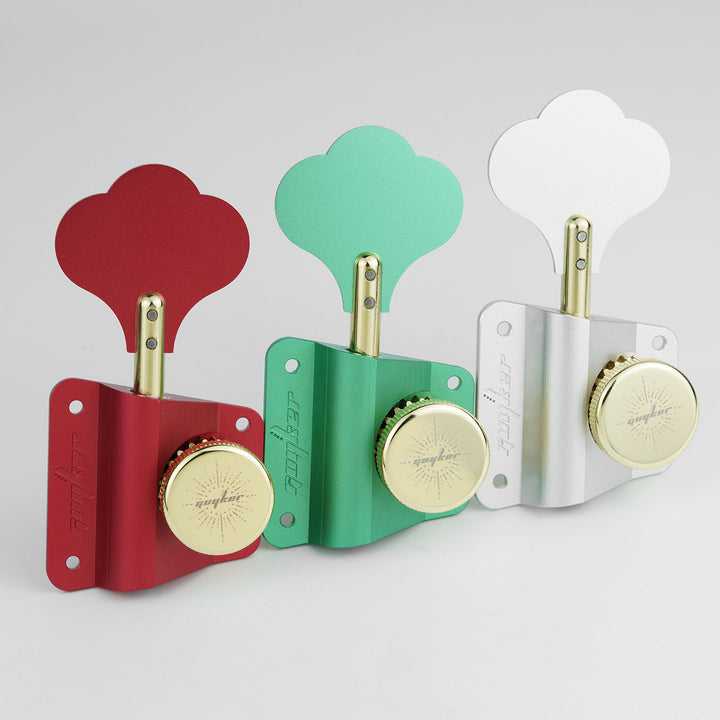
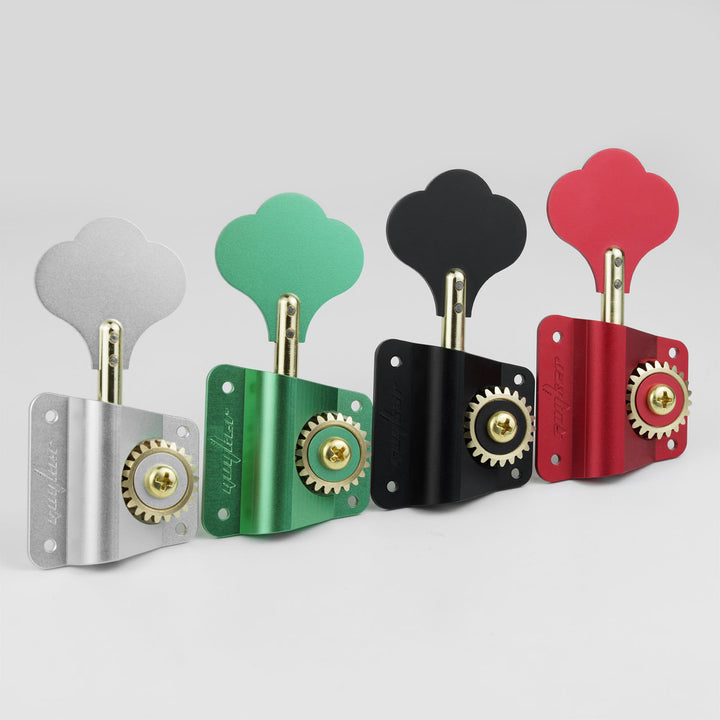
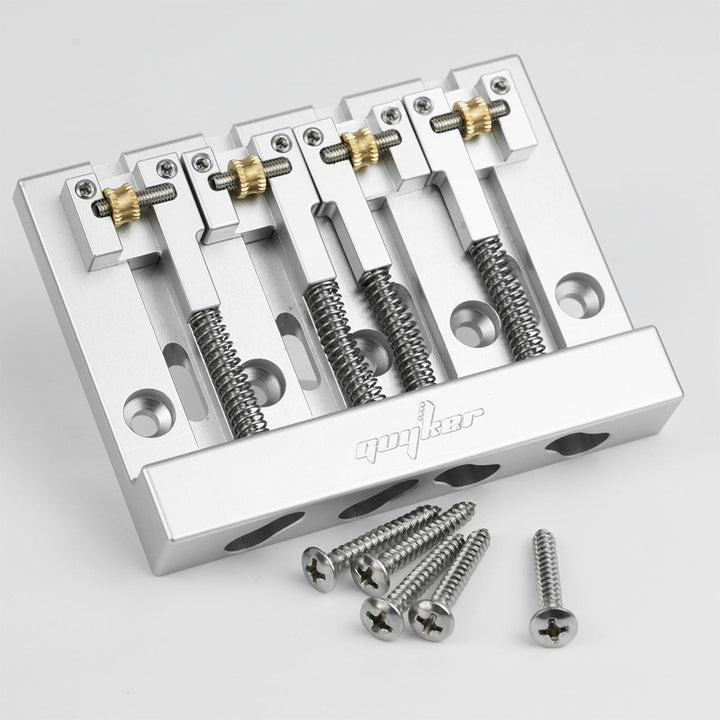
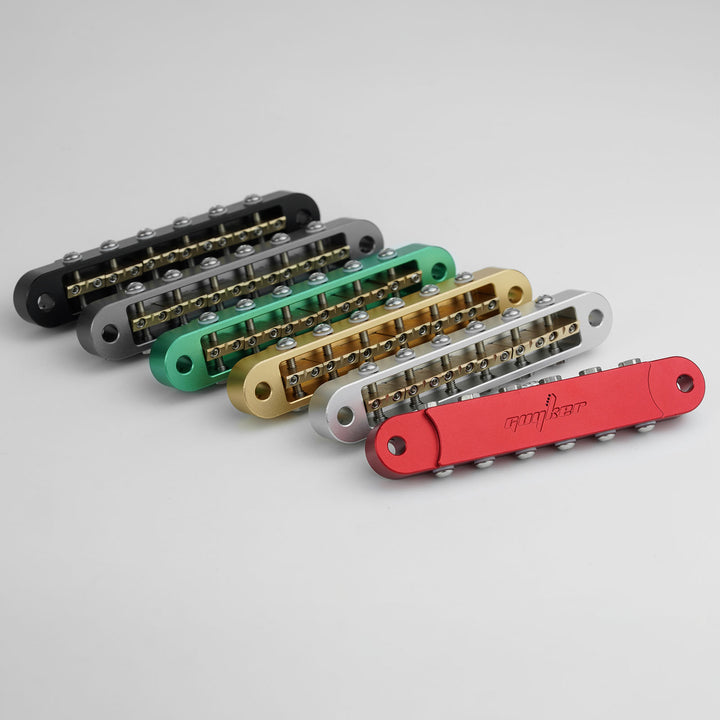
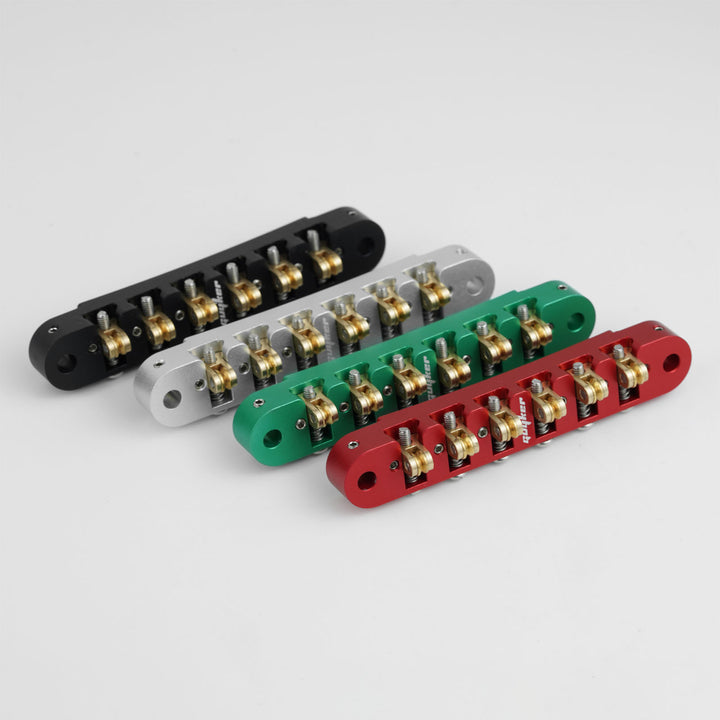
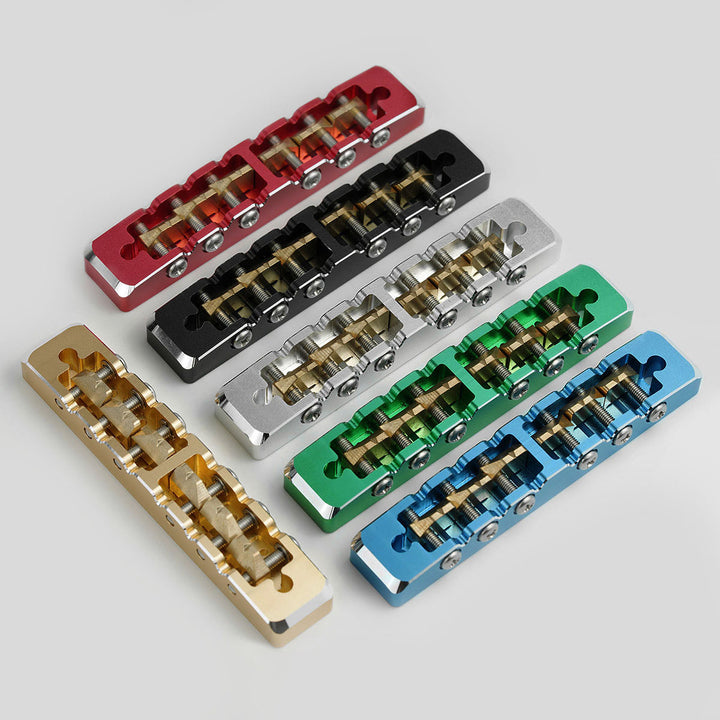
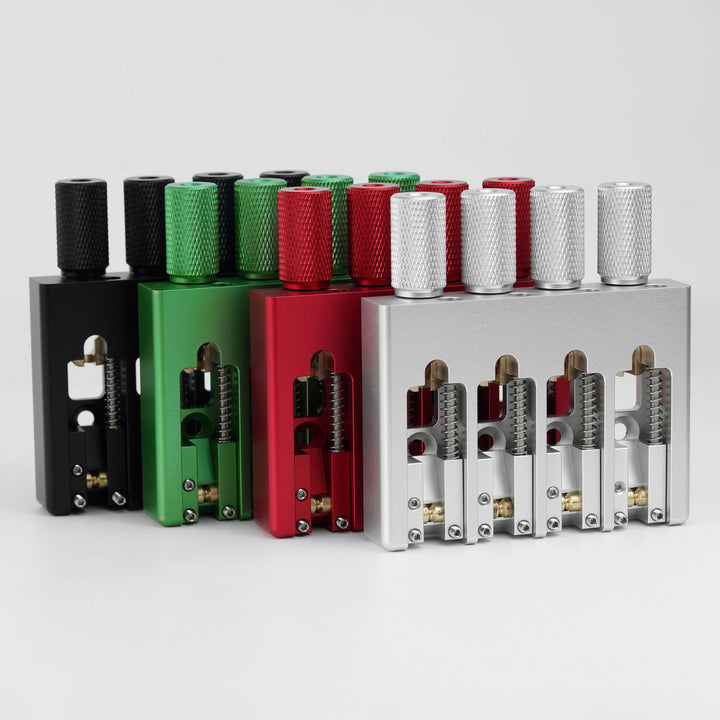
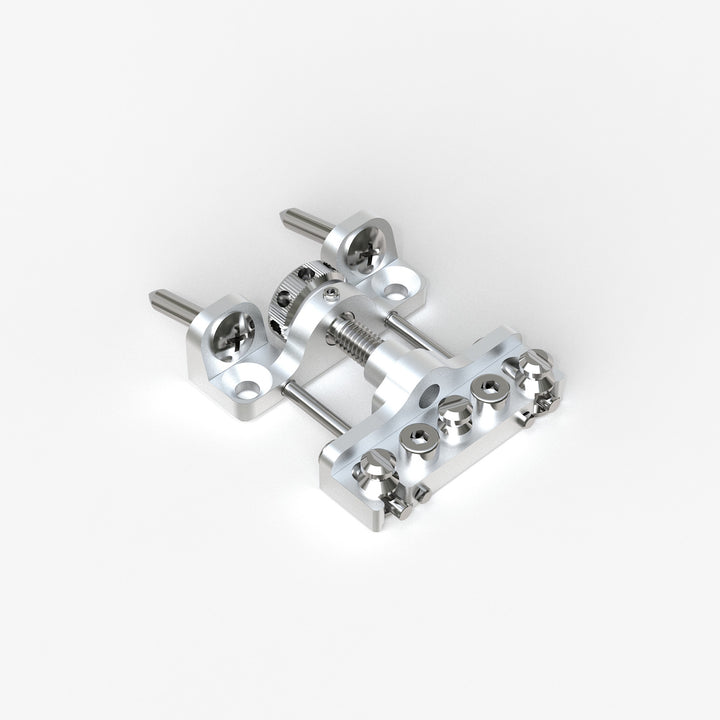
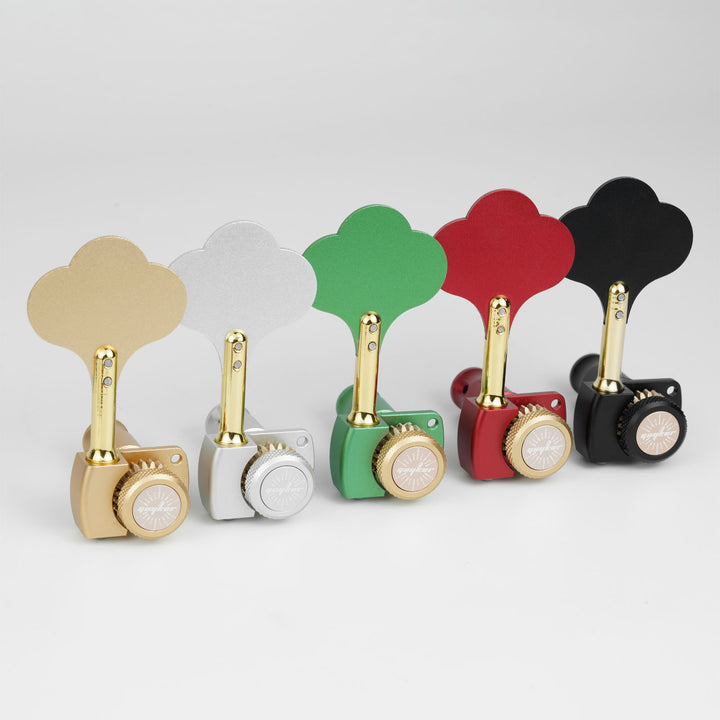
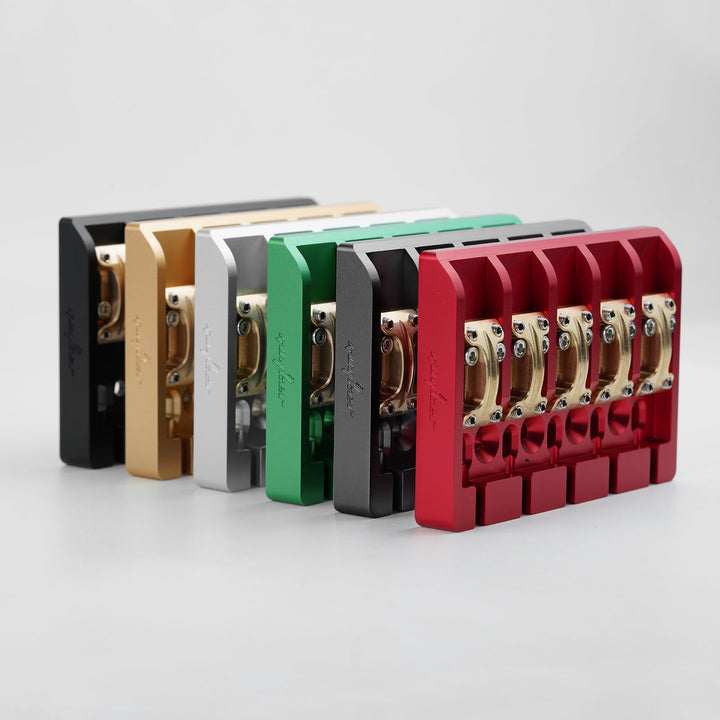
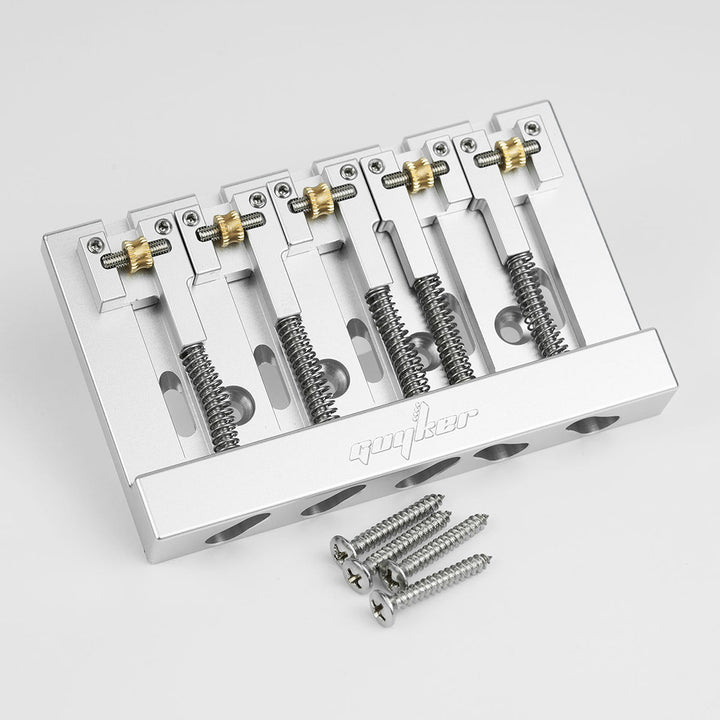
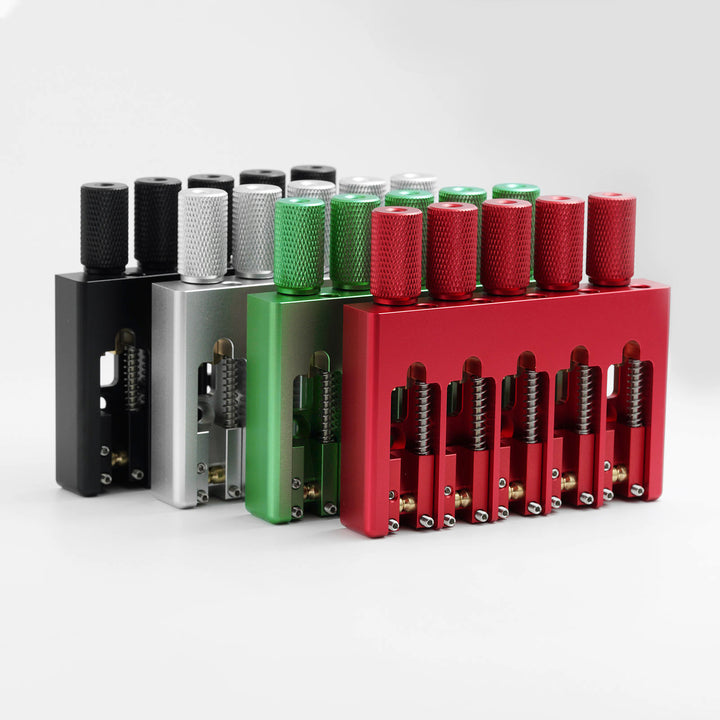
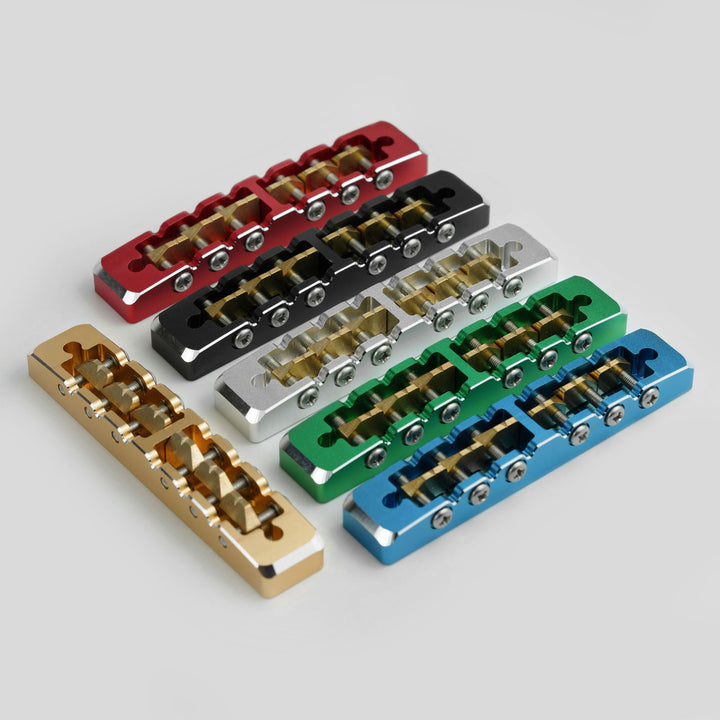
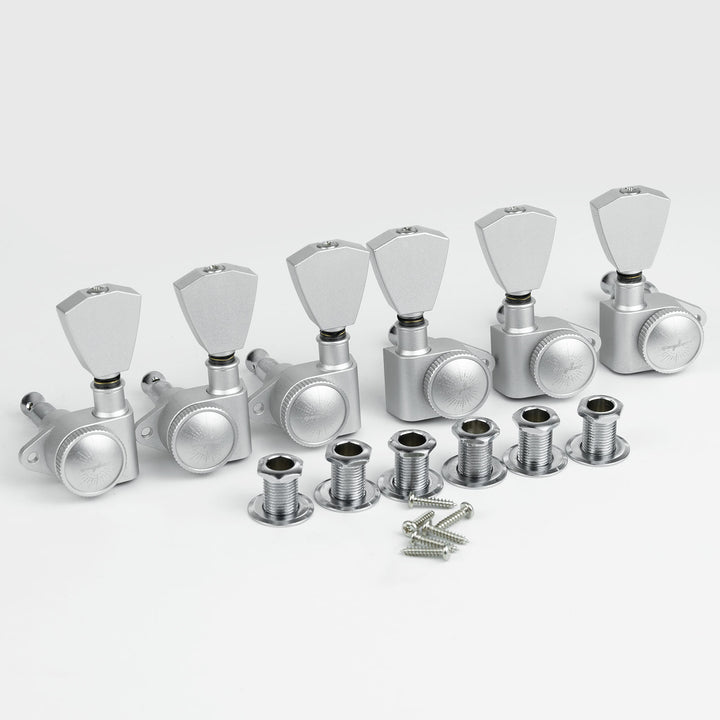
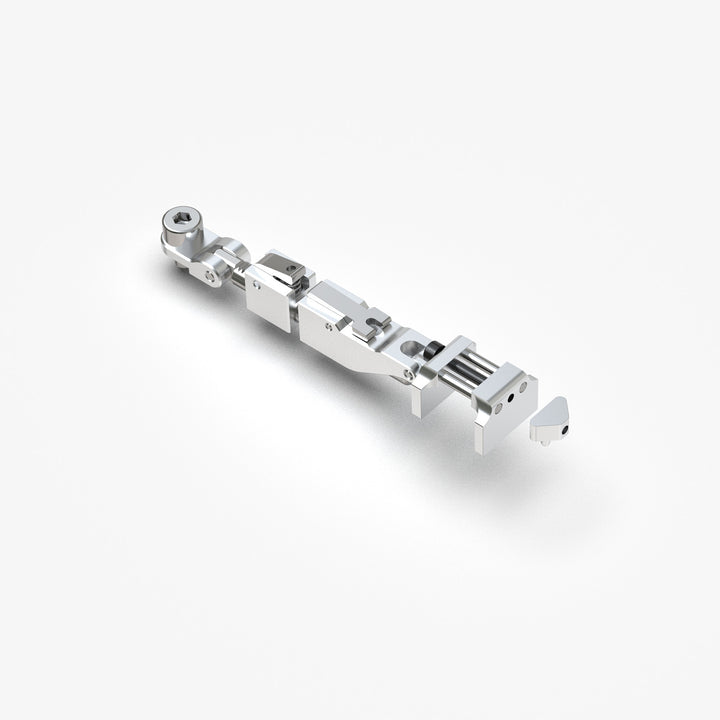
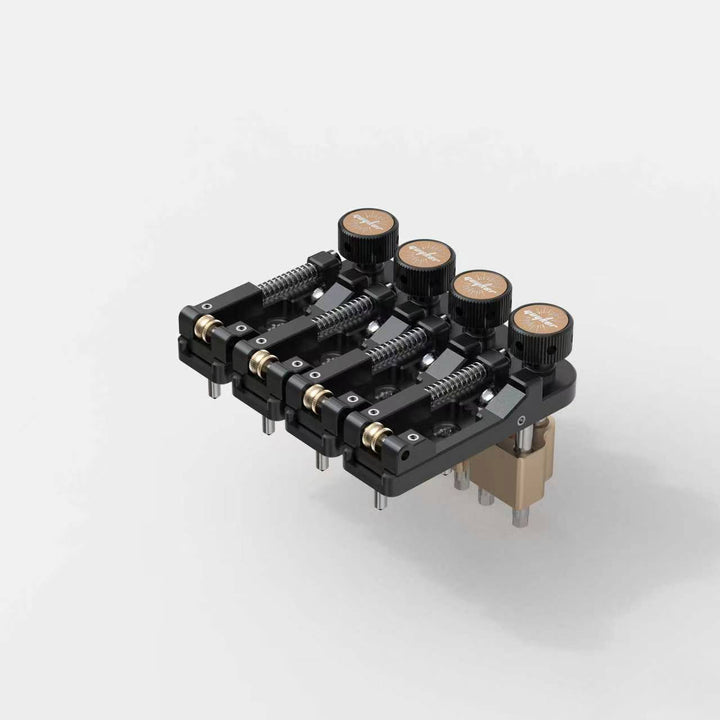
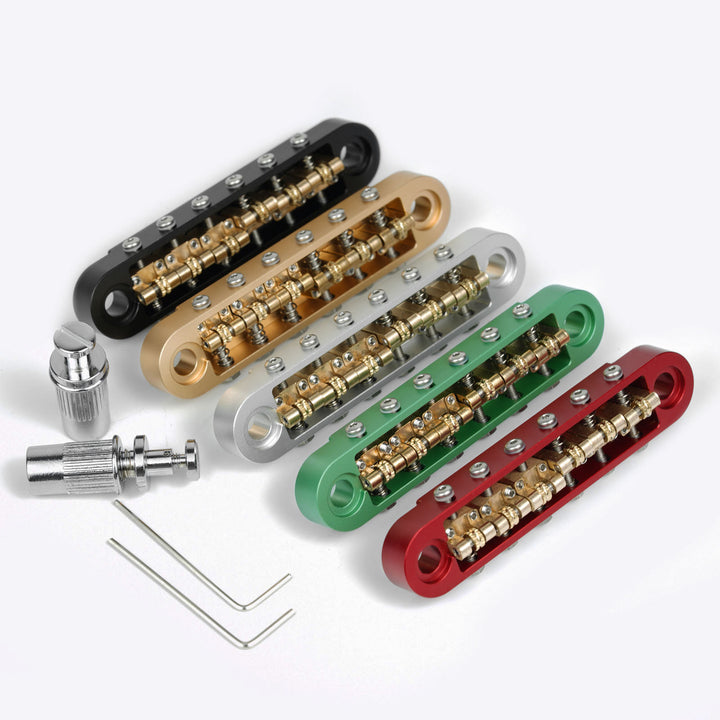
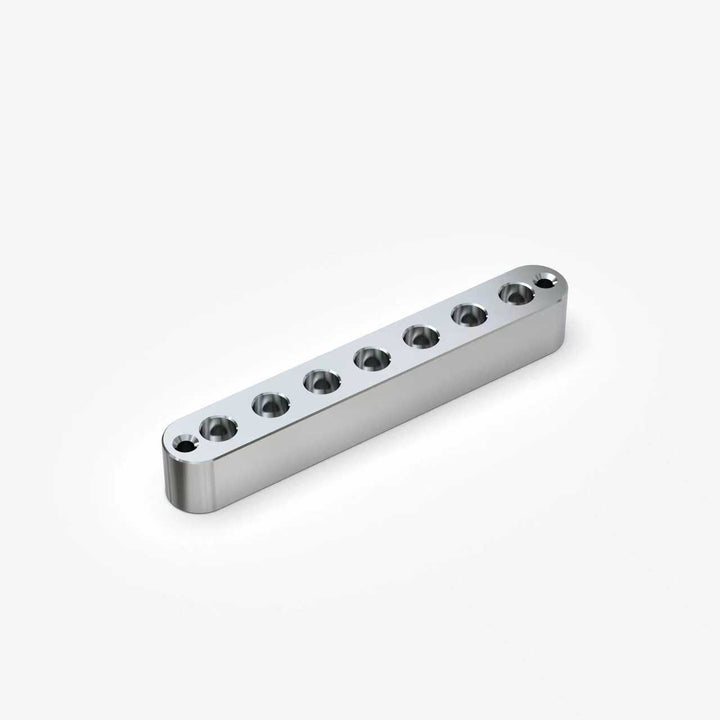
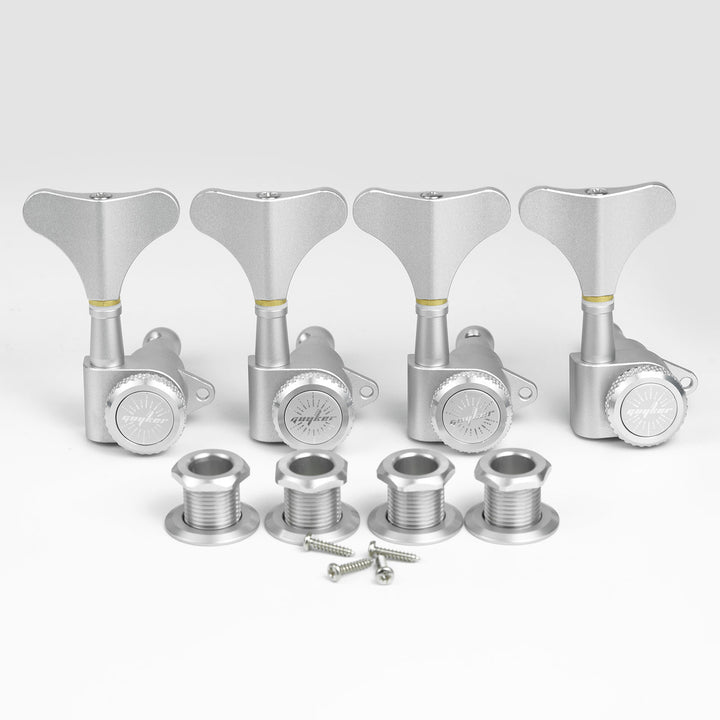
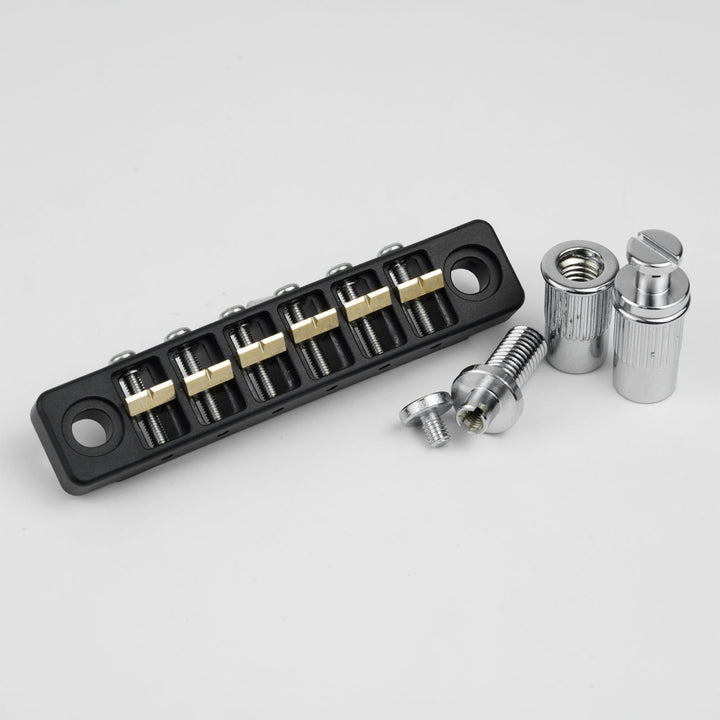
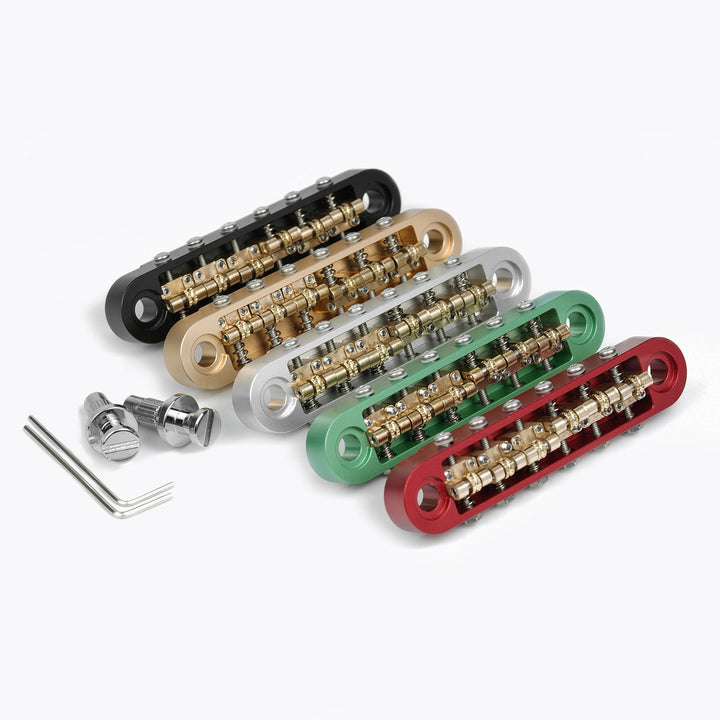
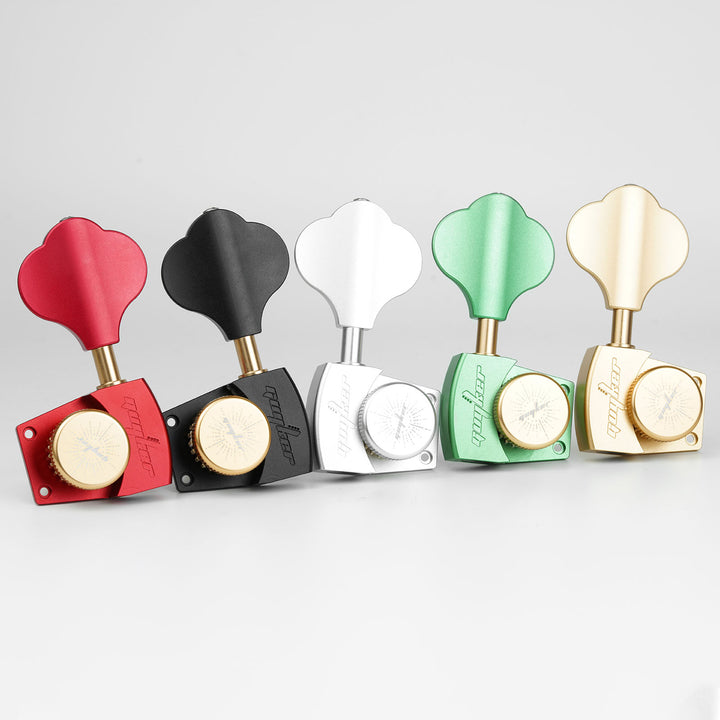
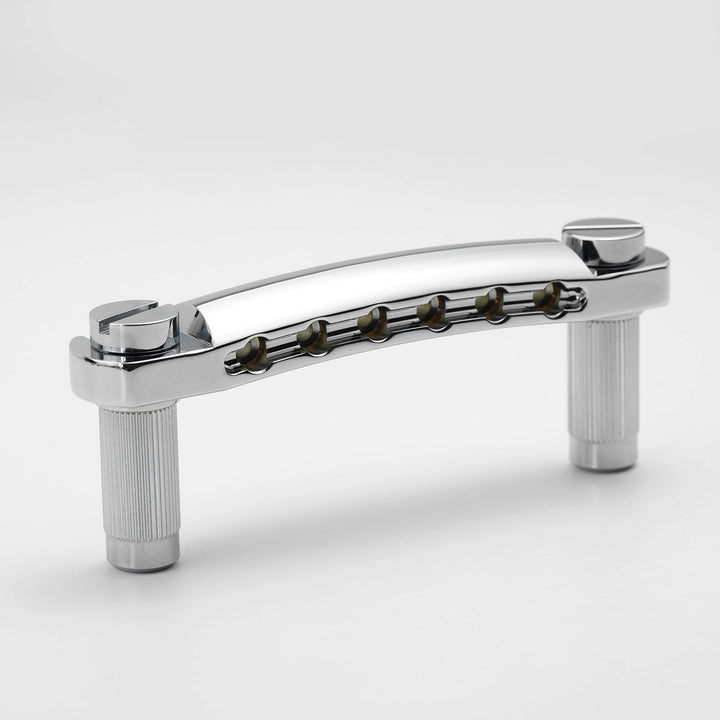
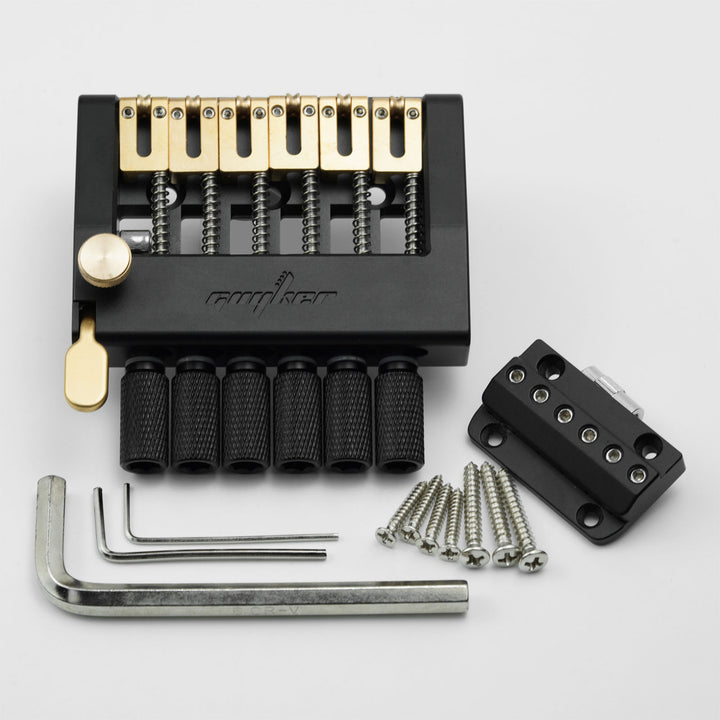
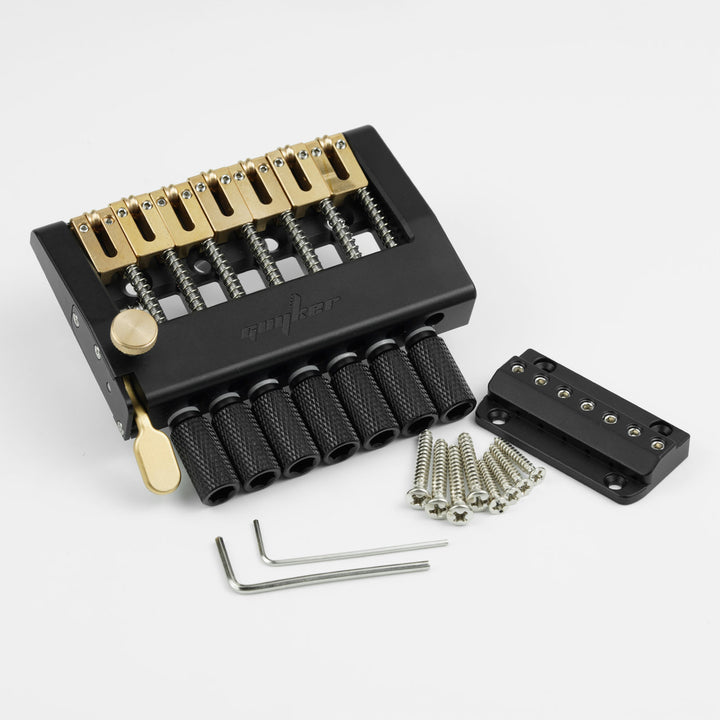
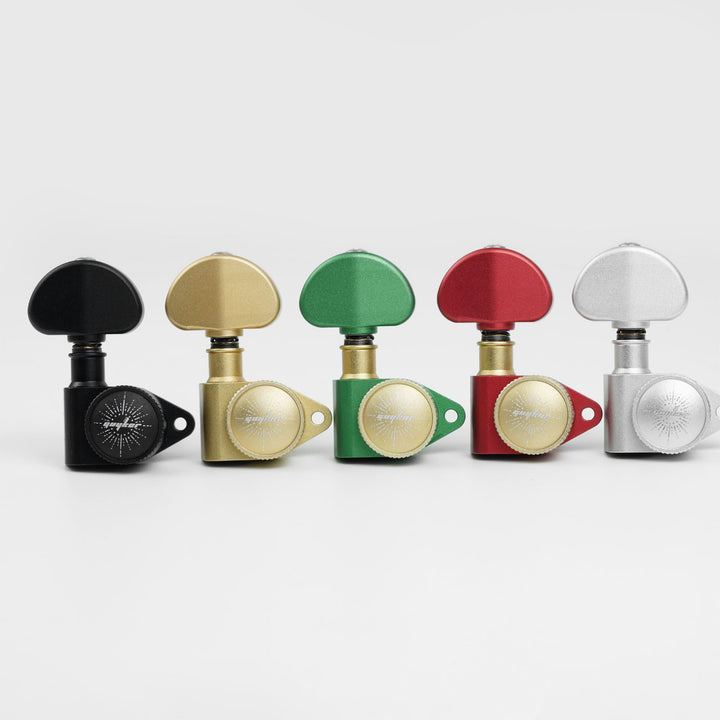
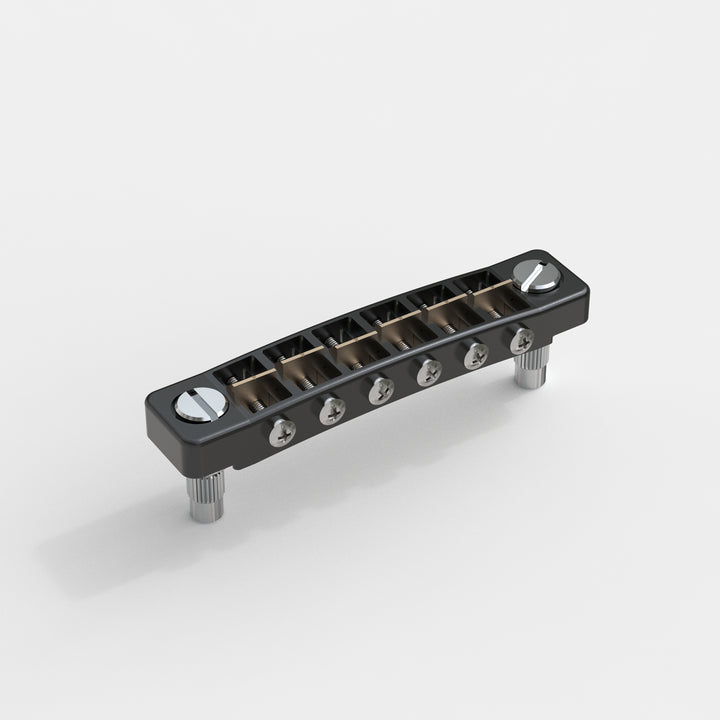
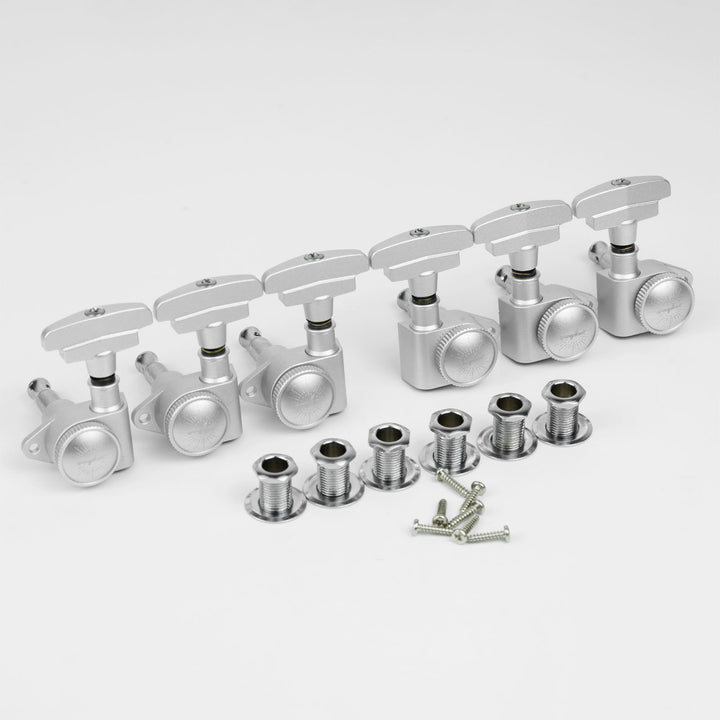
Every part weighed against the stock component it replaces. Switch category to compare bridges, tailpieces and tuners.
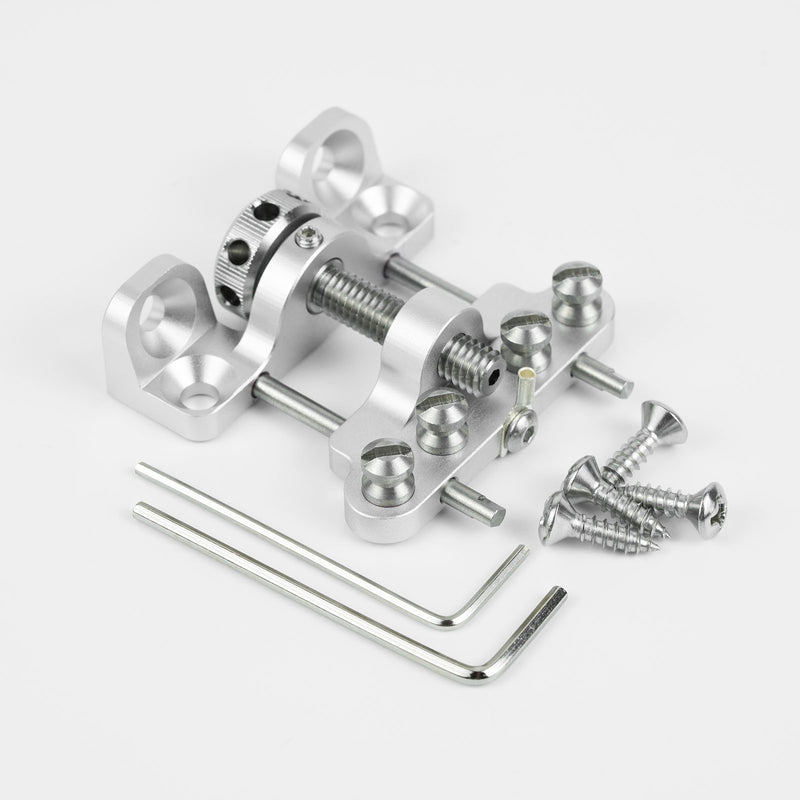
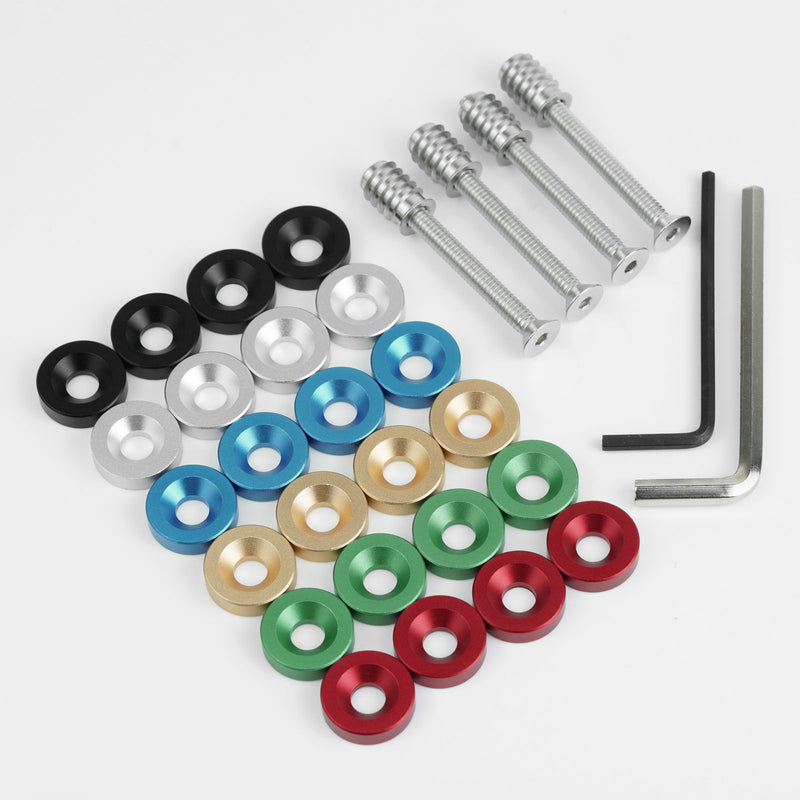
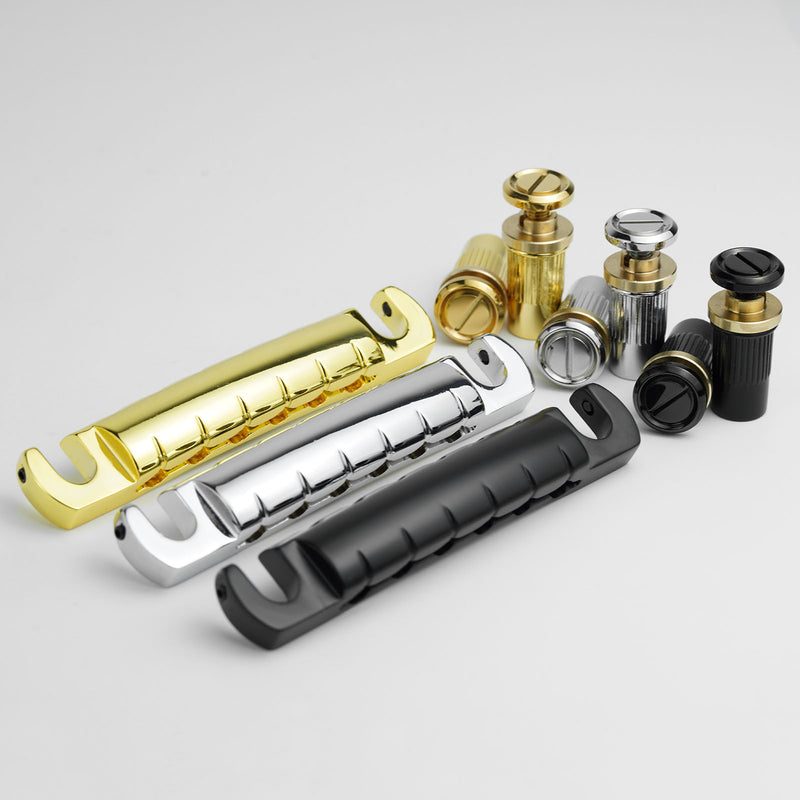
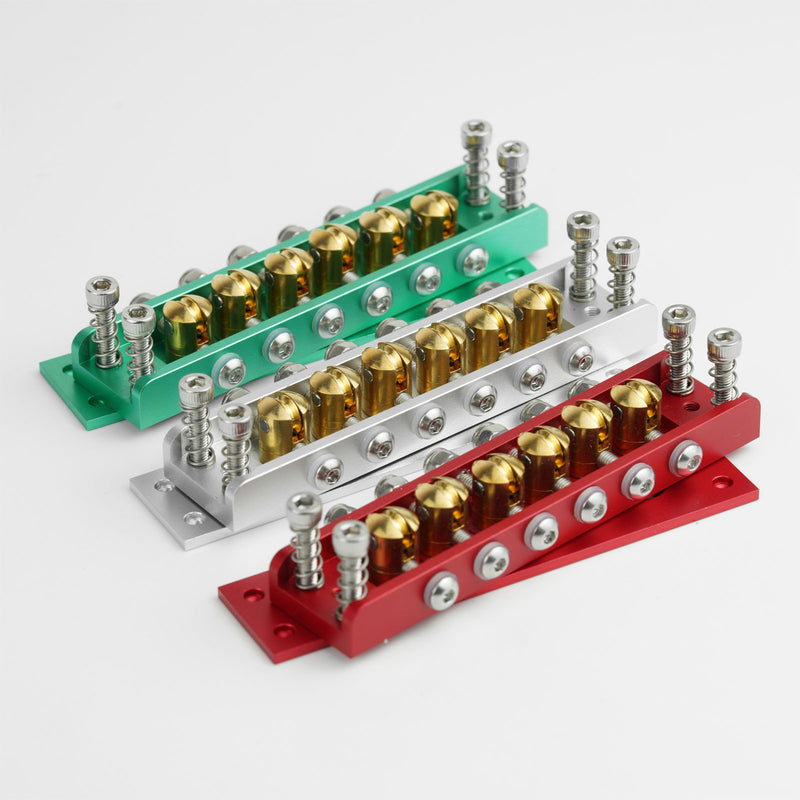
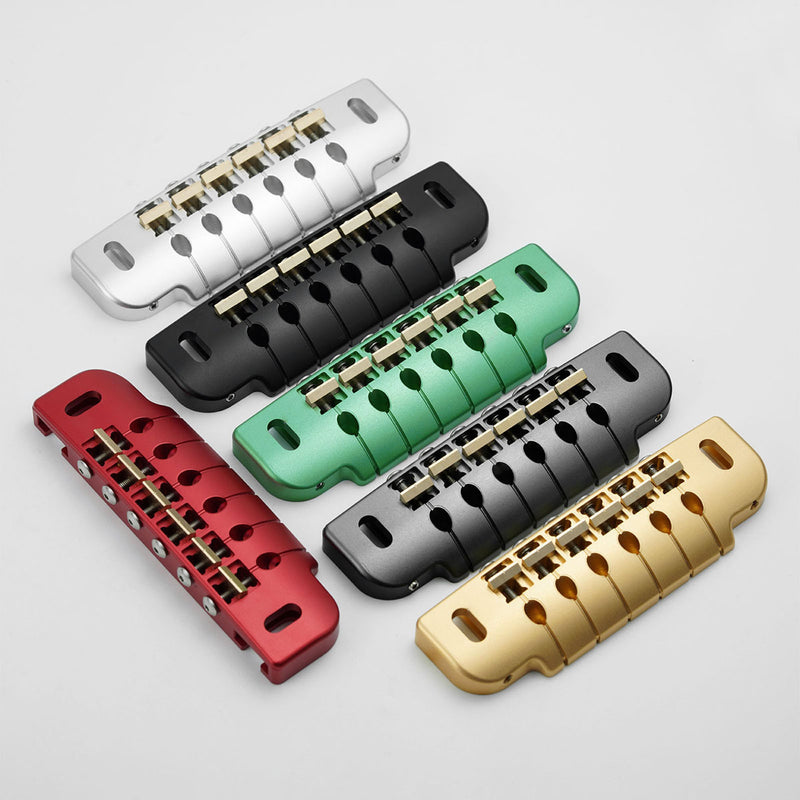
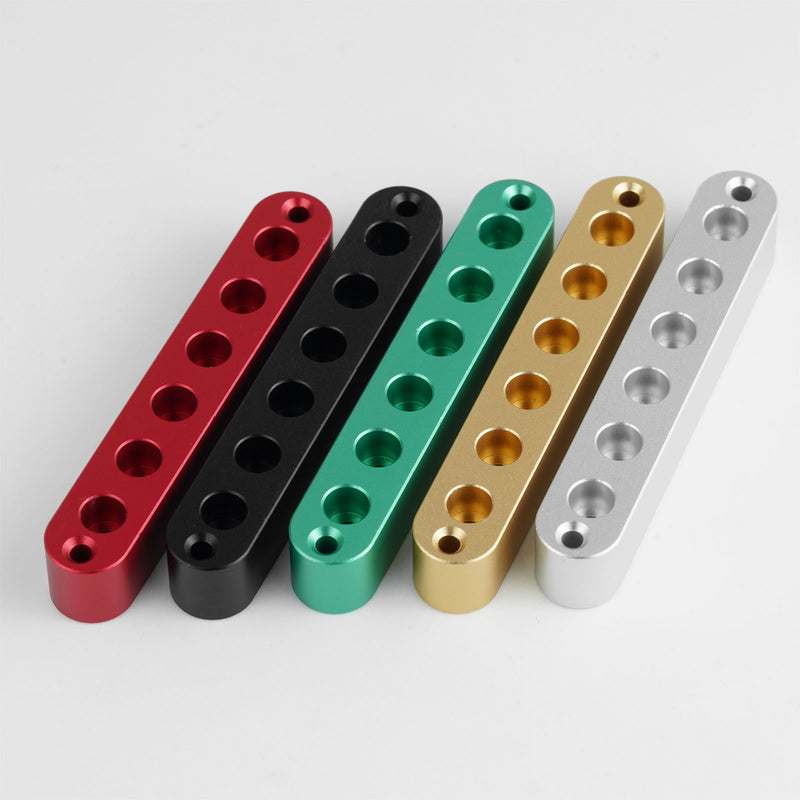
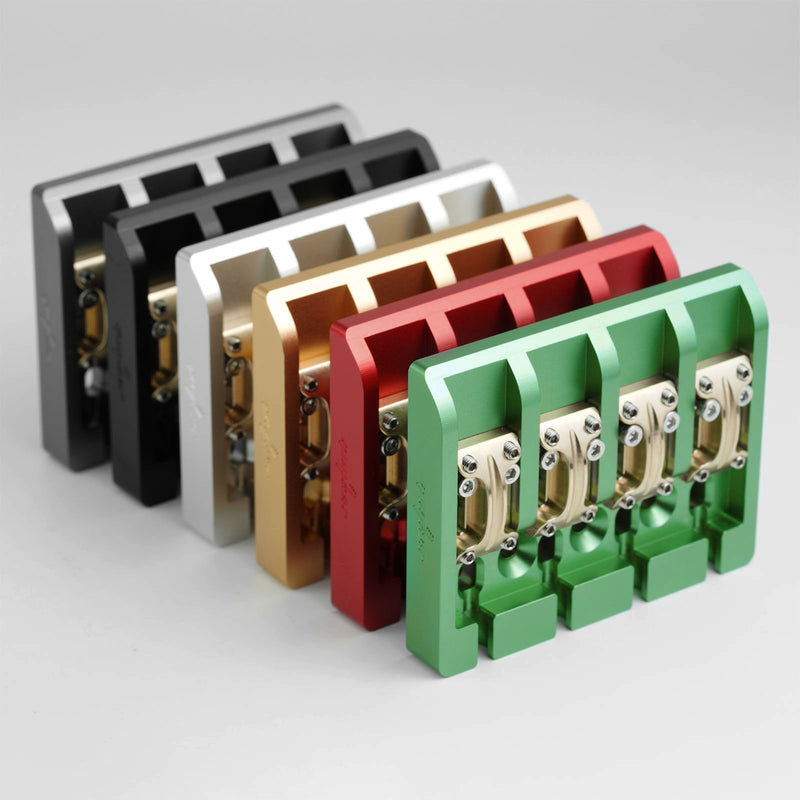
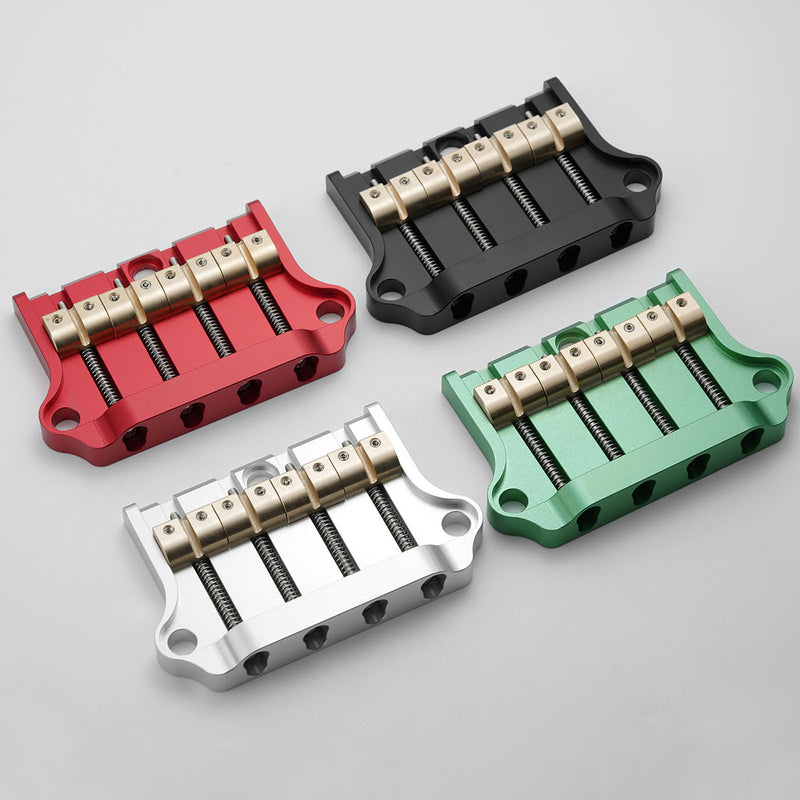
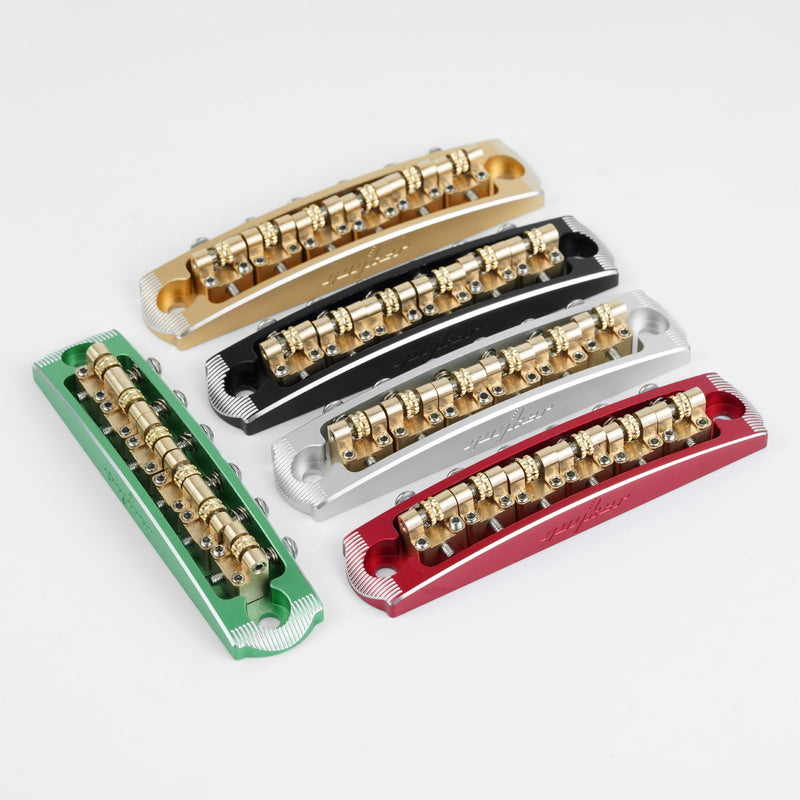
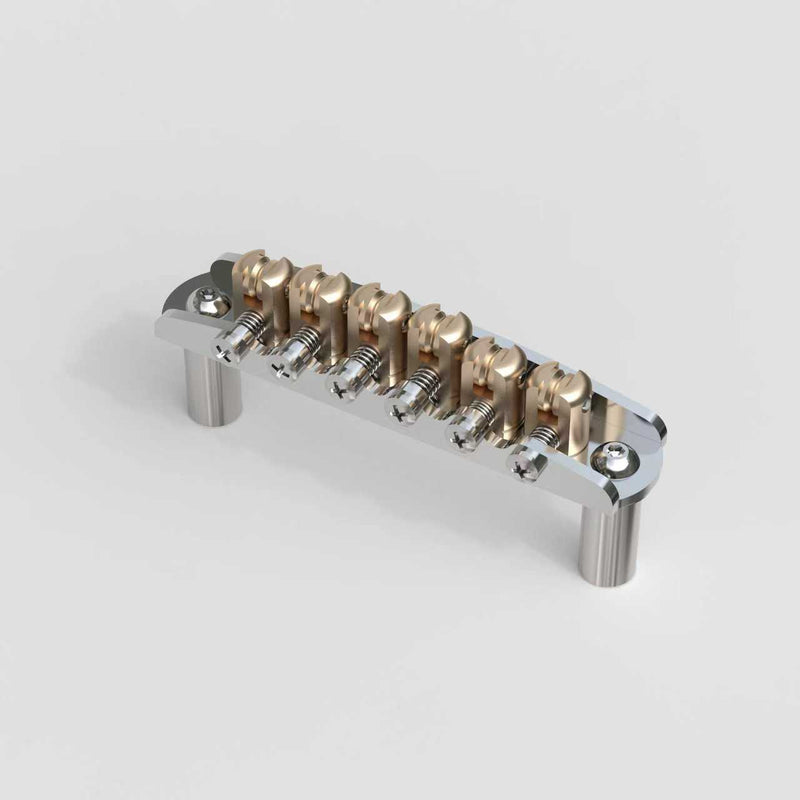
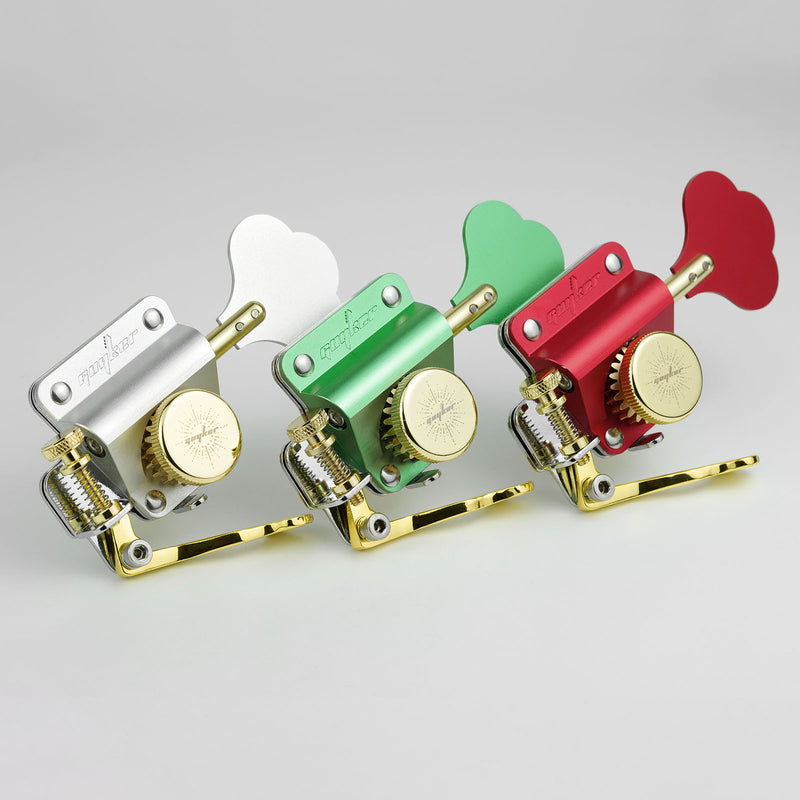
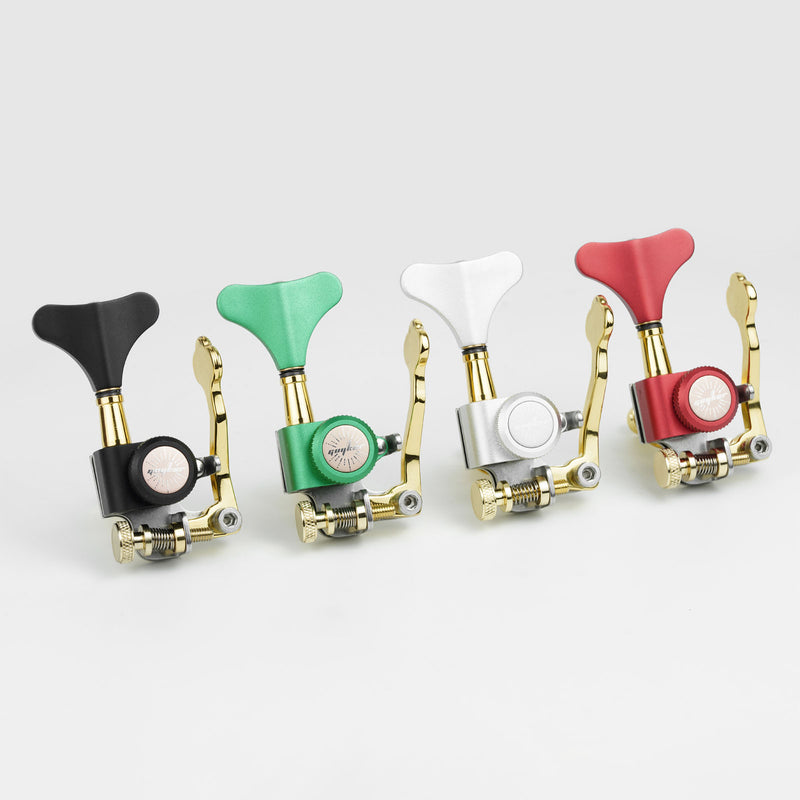
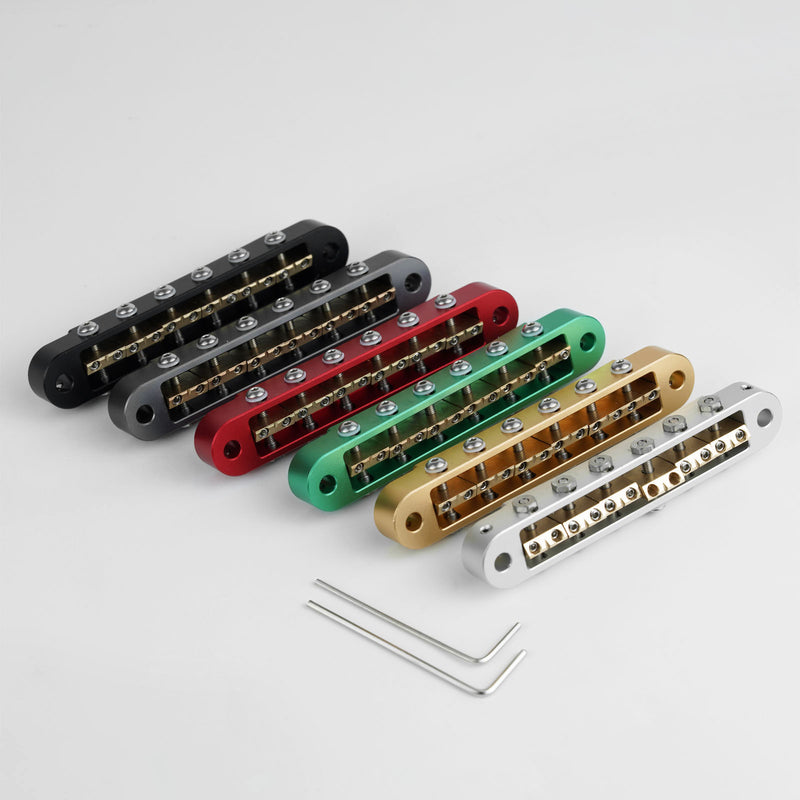
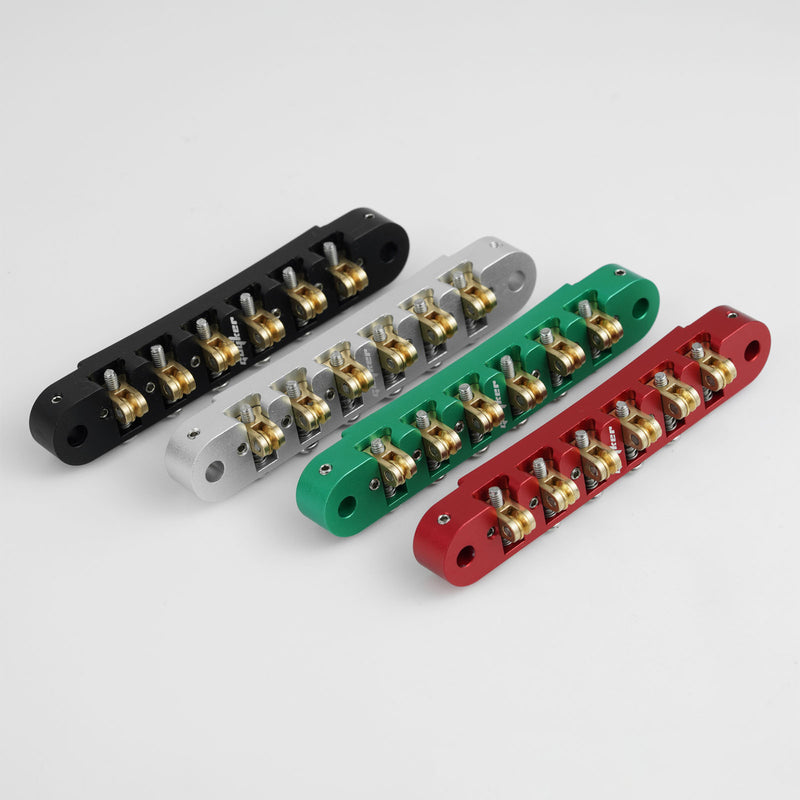
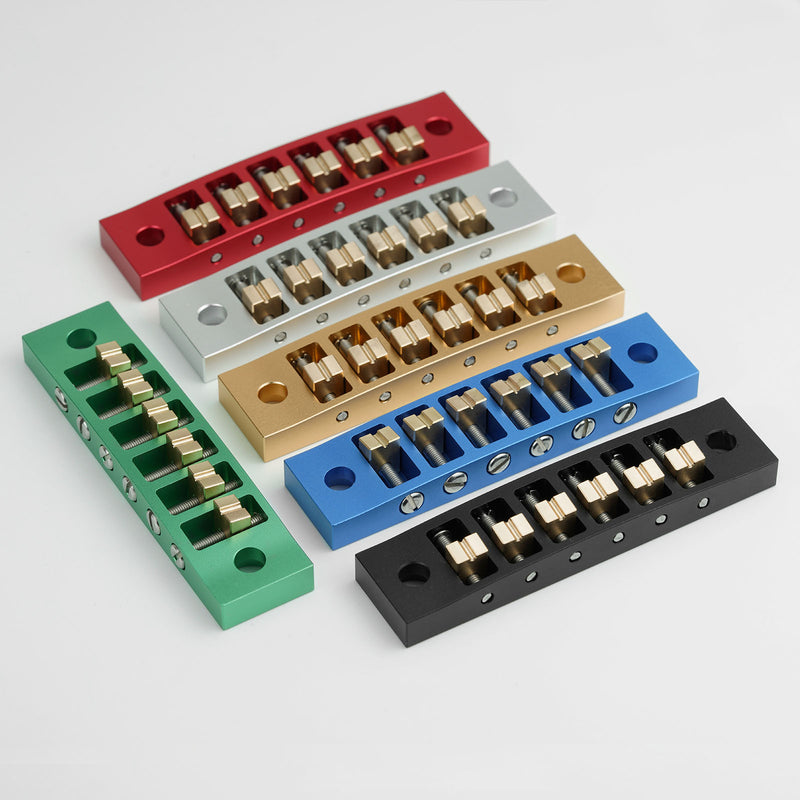
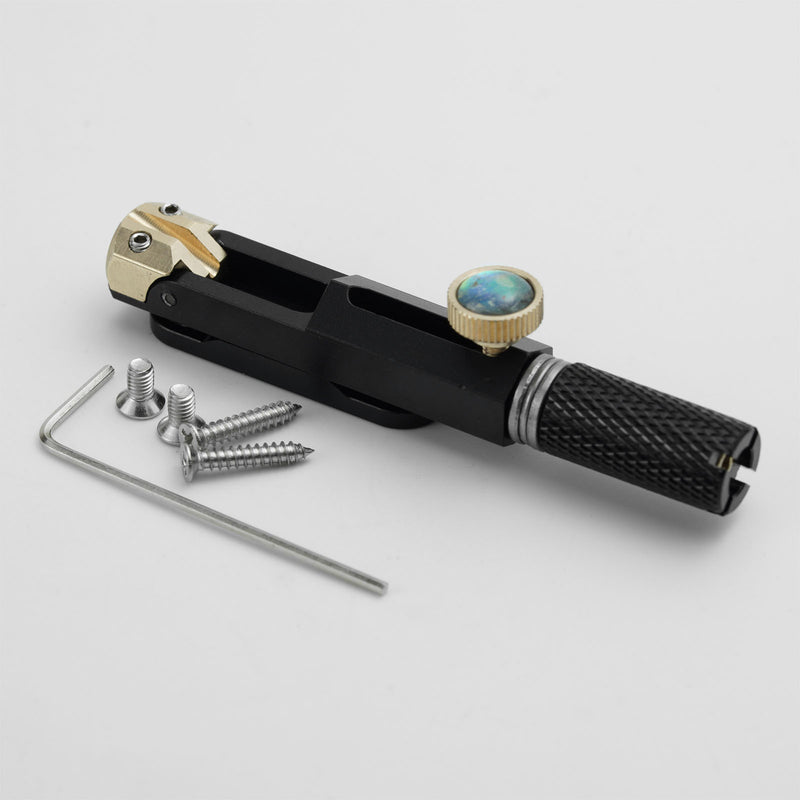
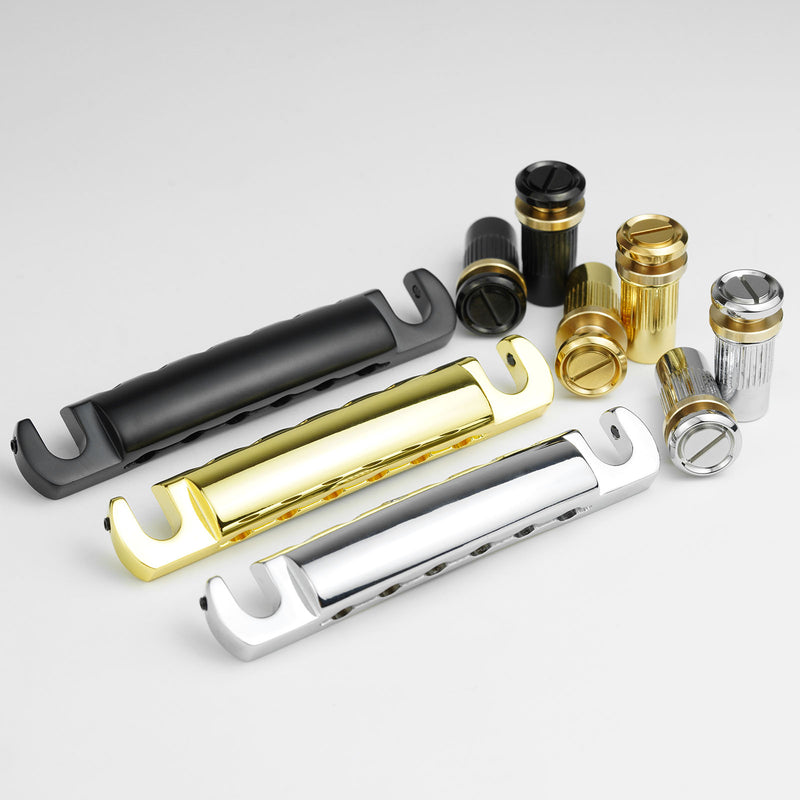
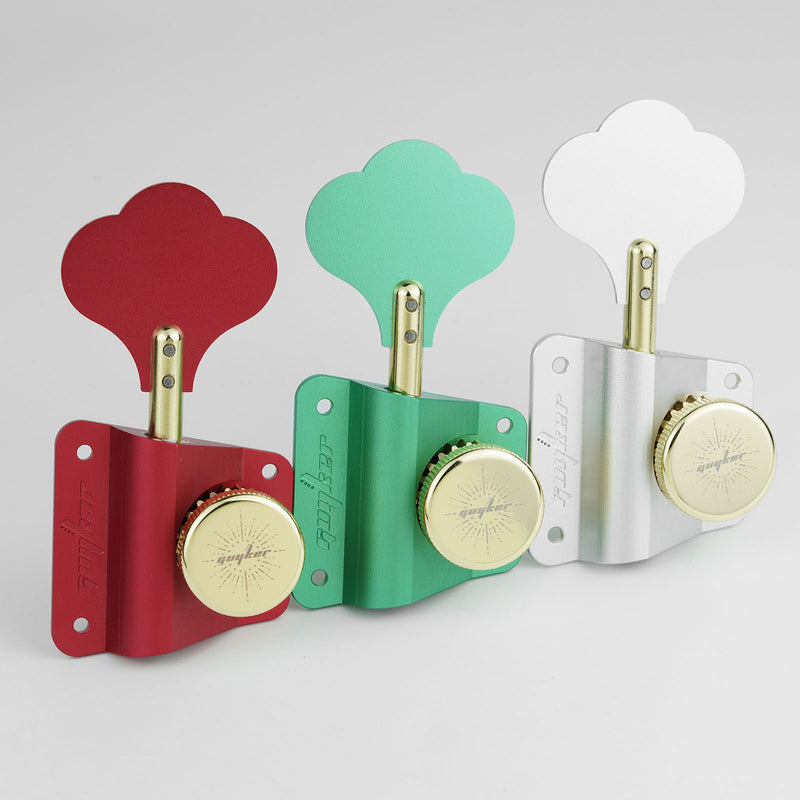
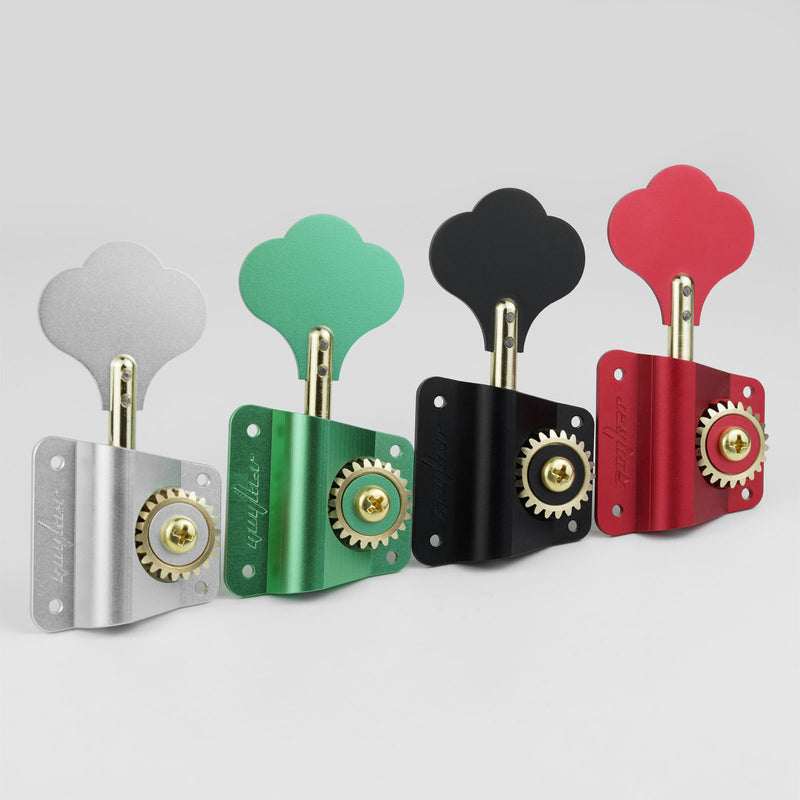
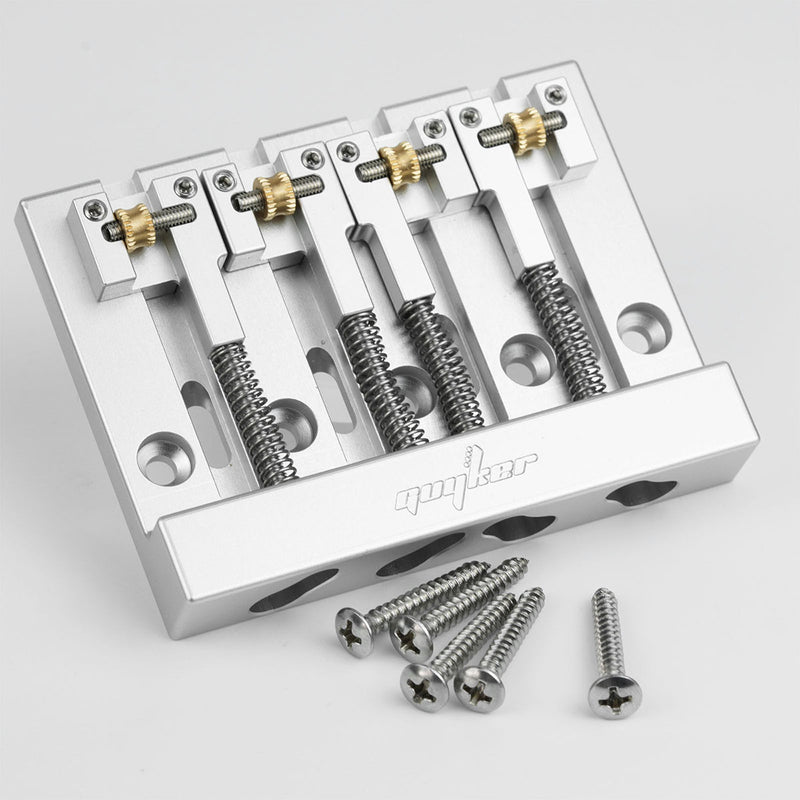
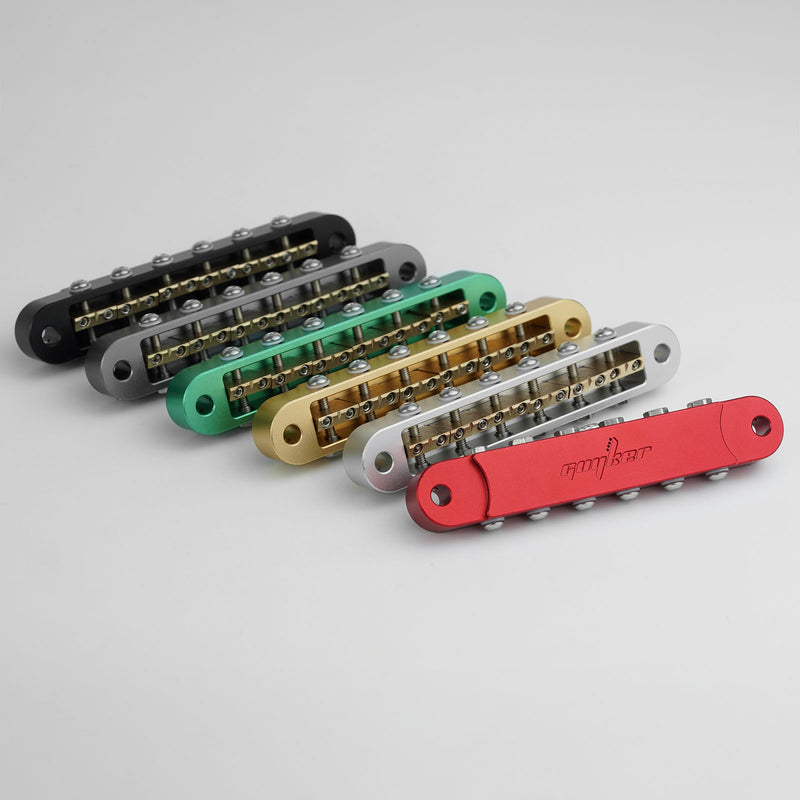
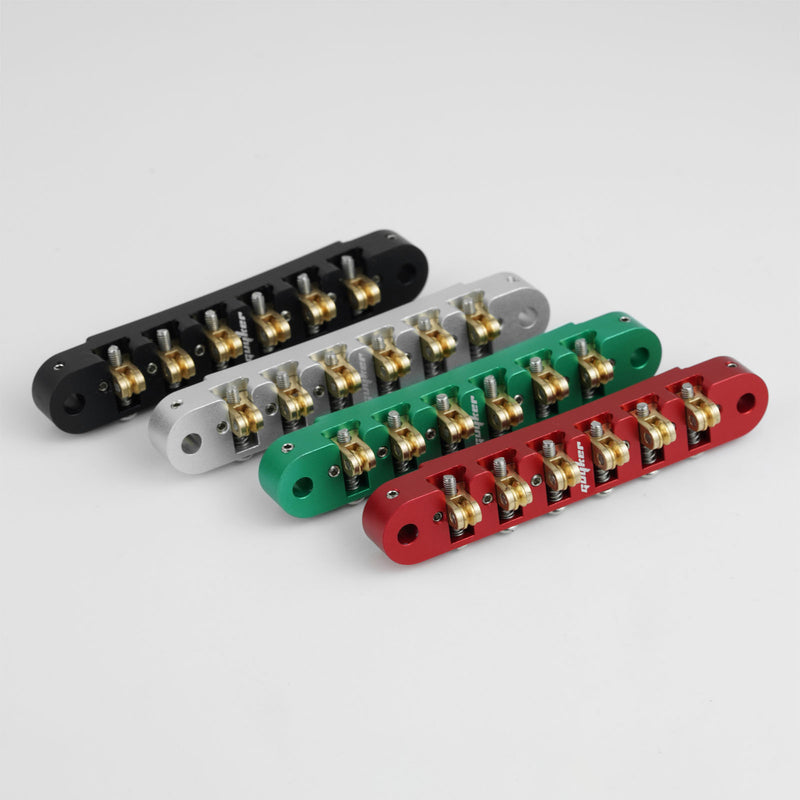
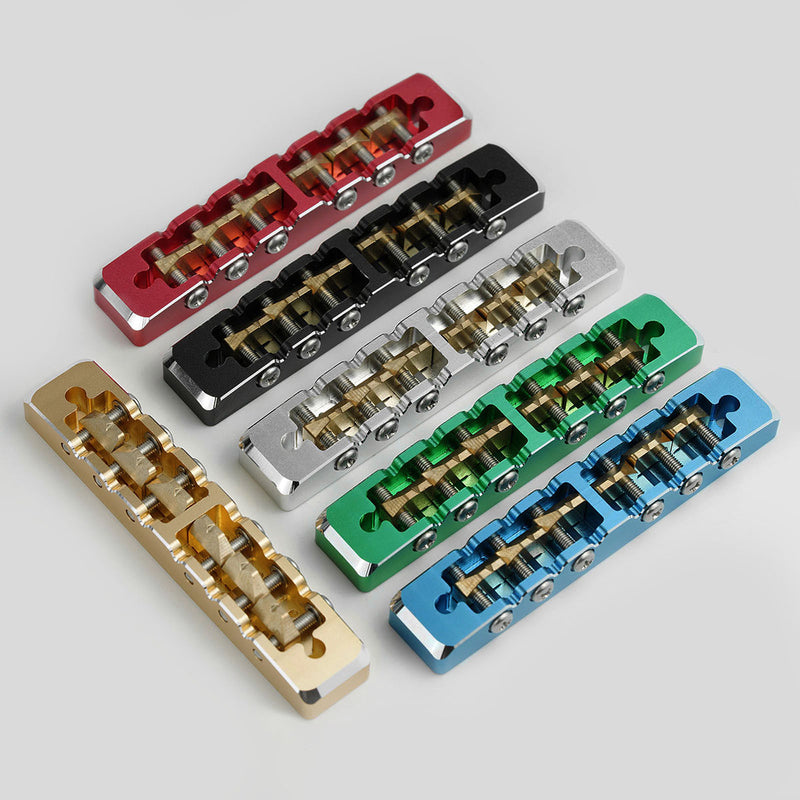
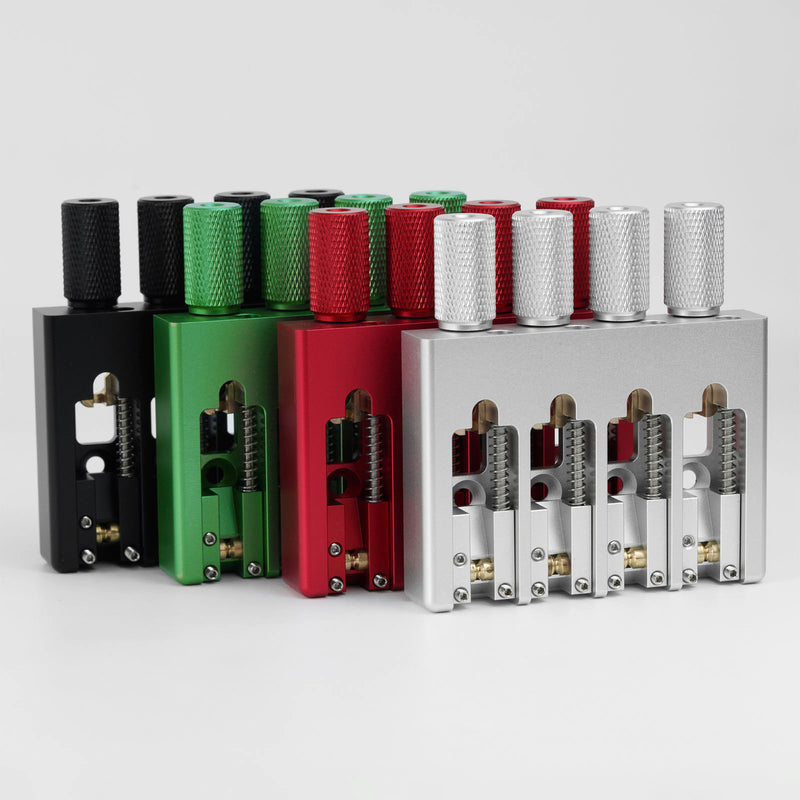
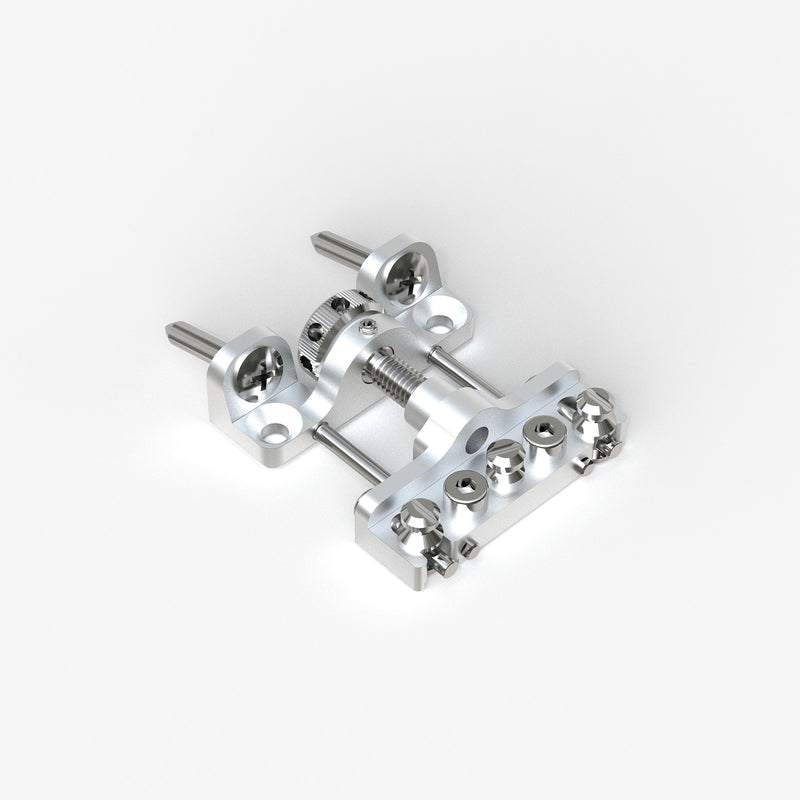
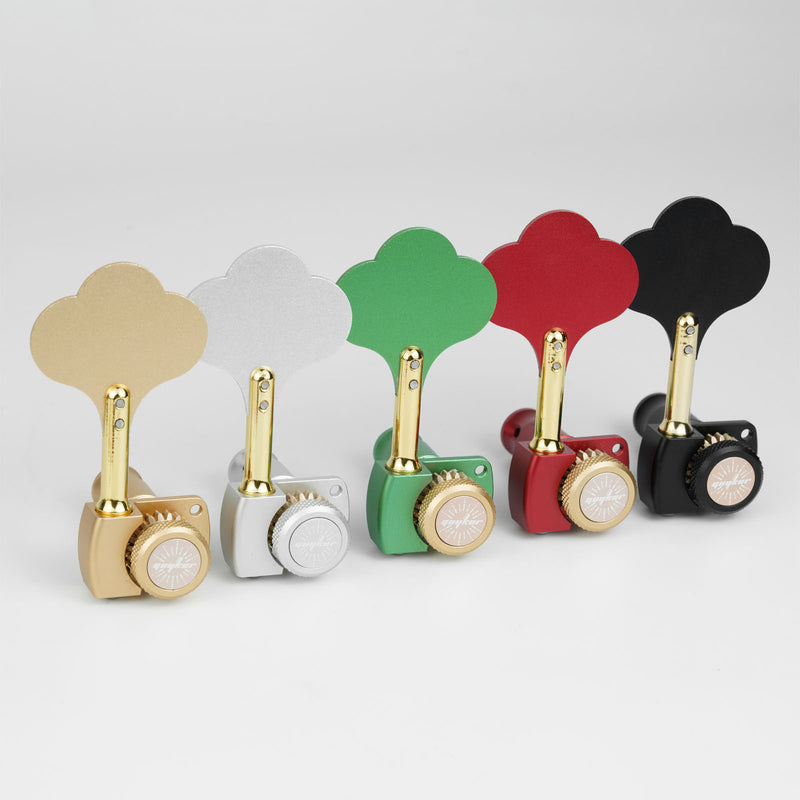
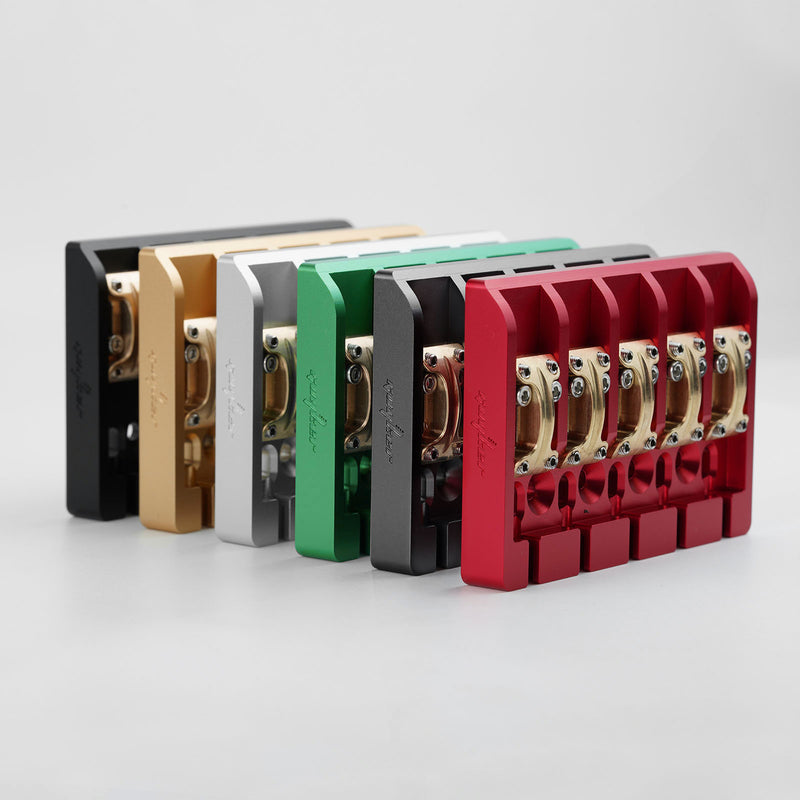
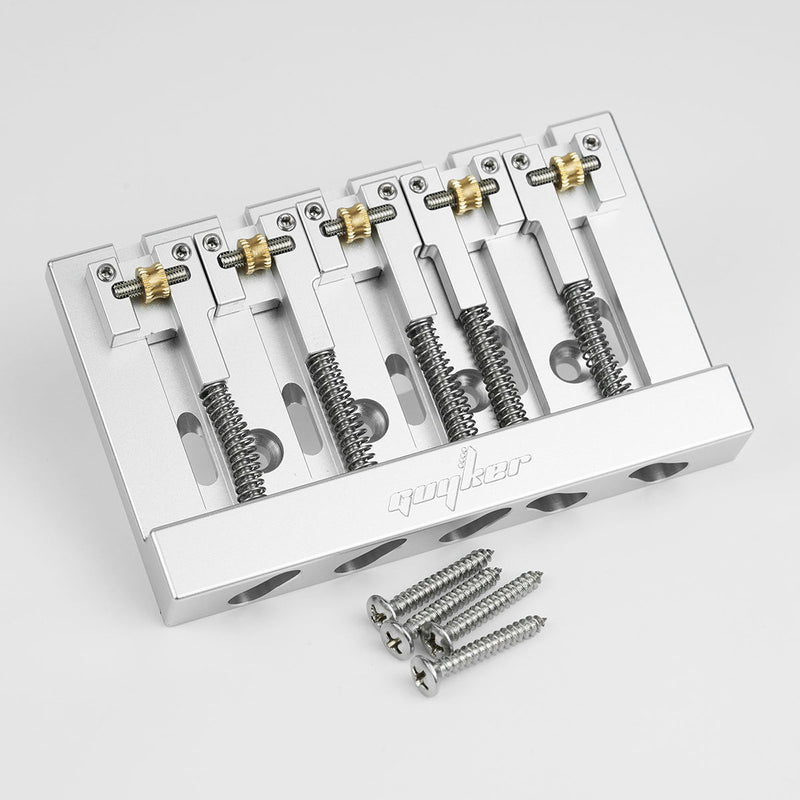
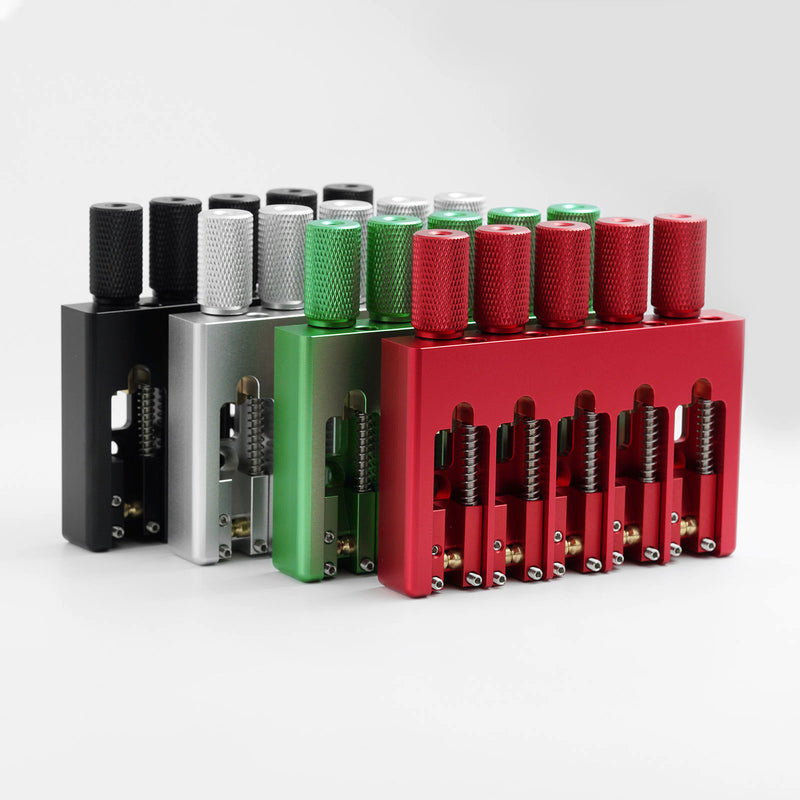
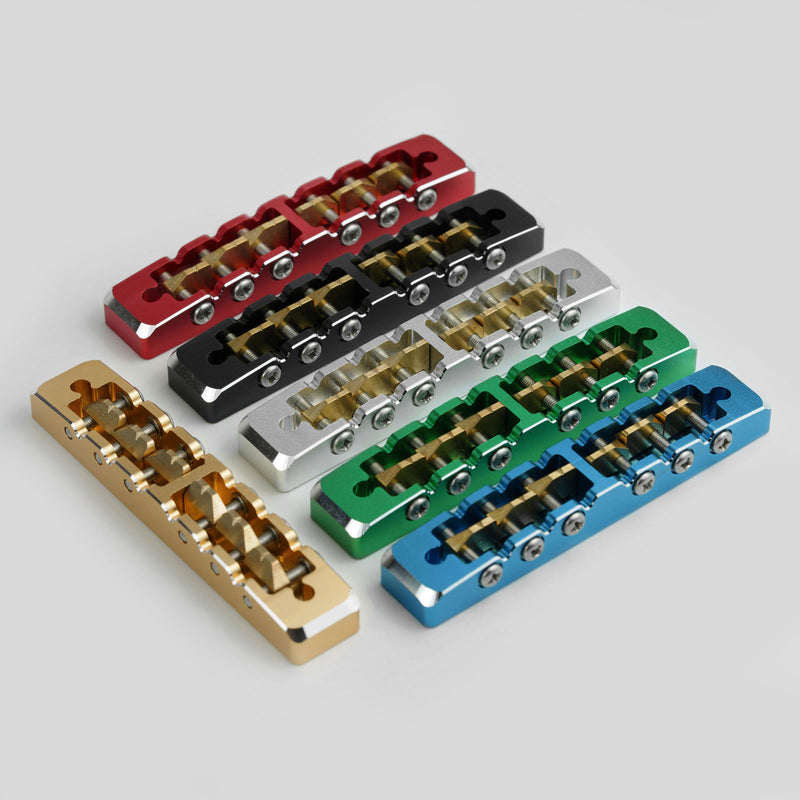
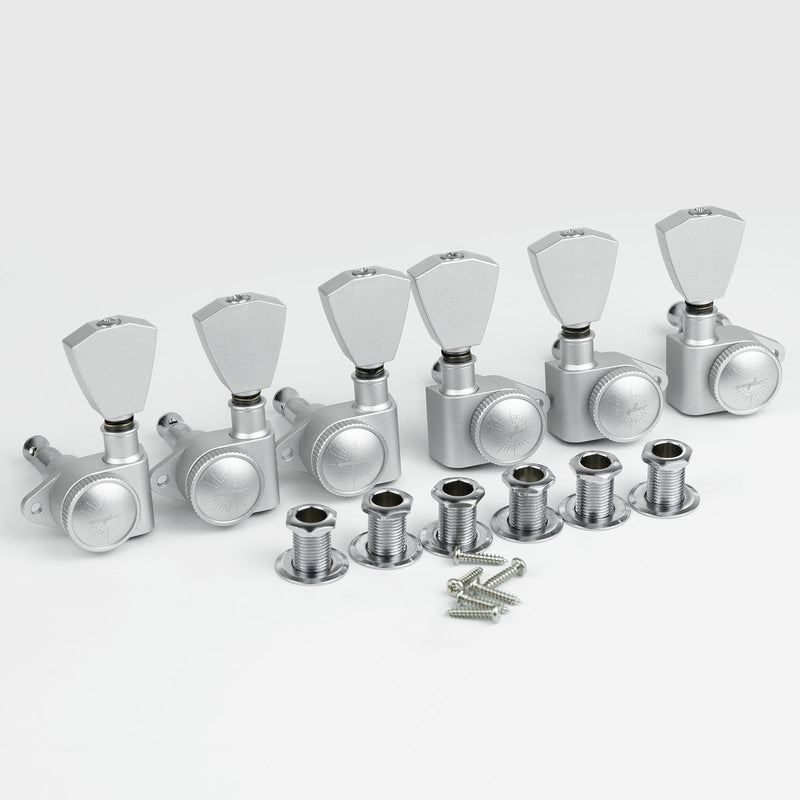
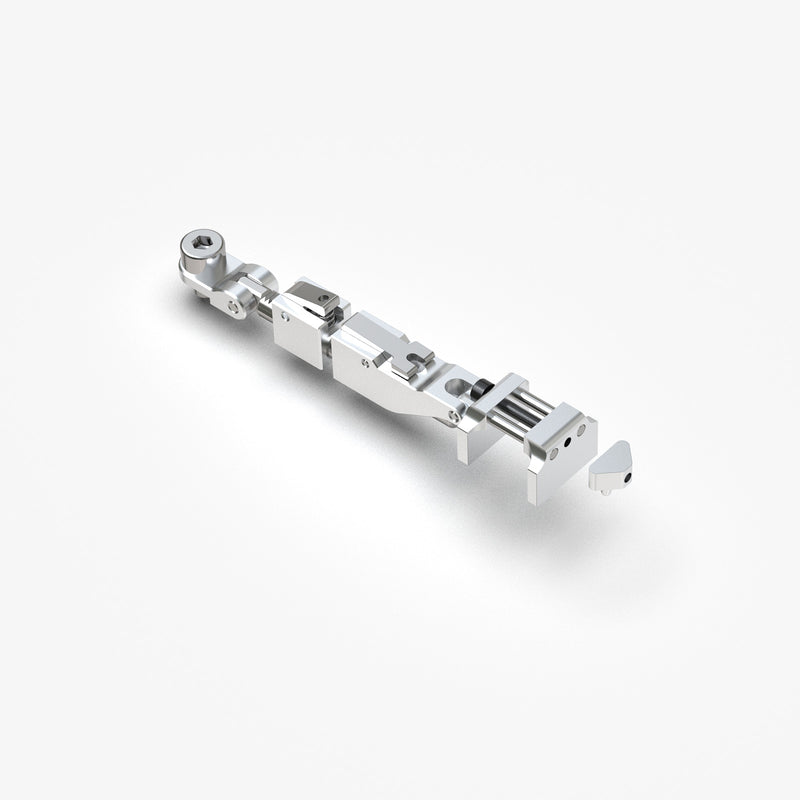
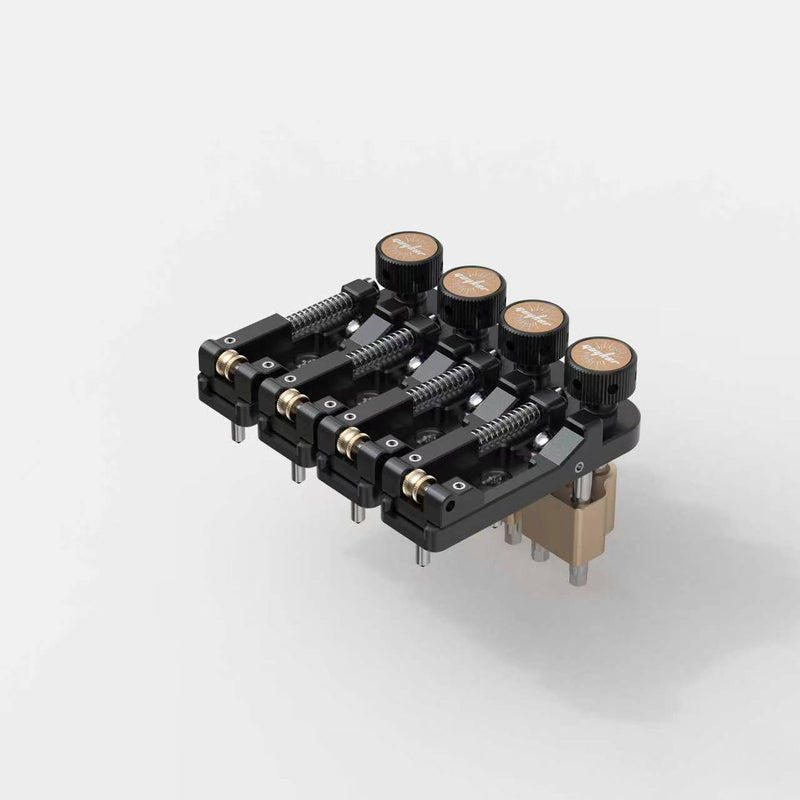
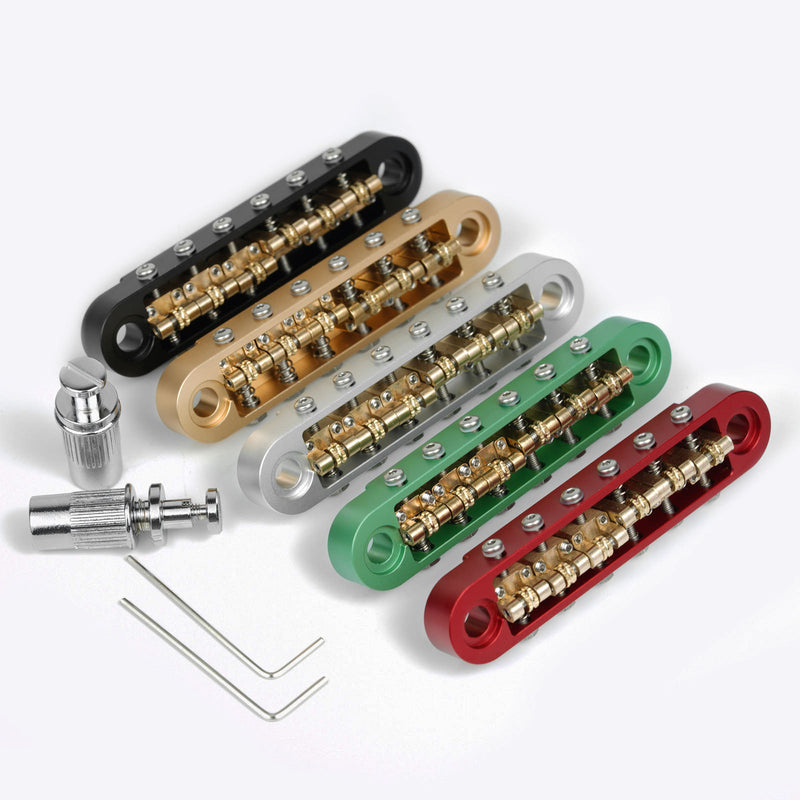
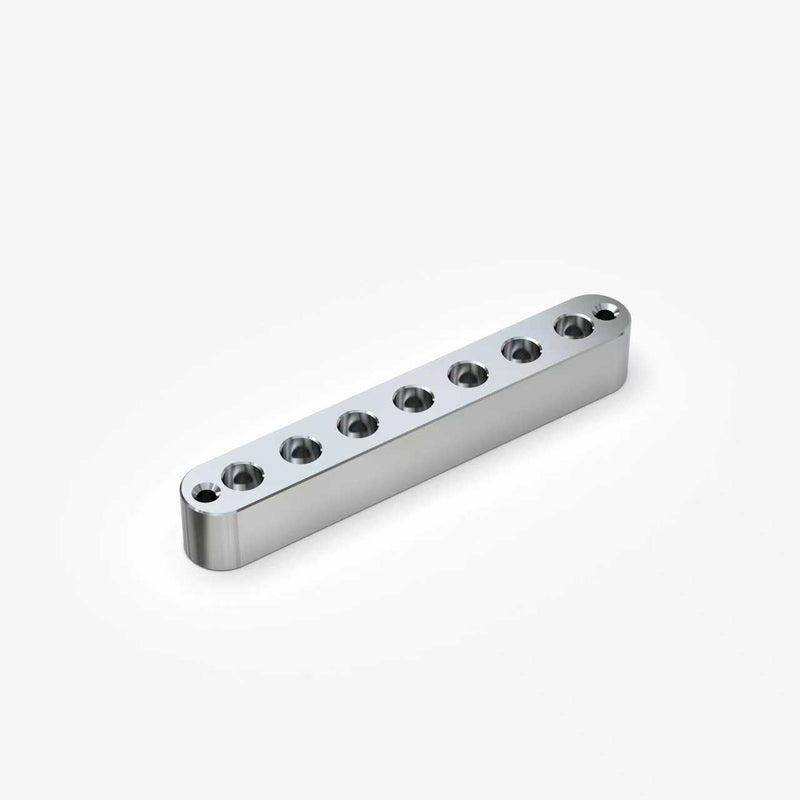
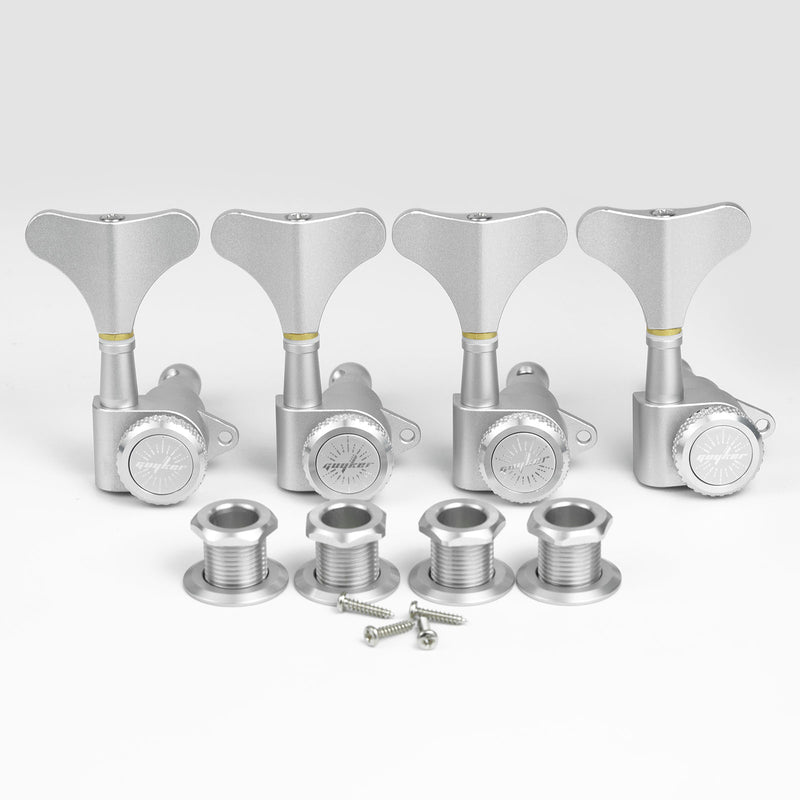
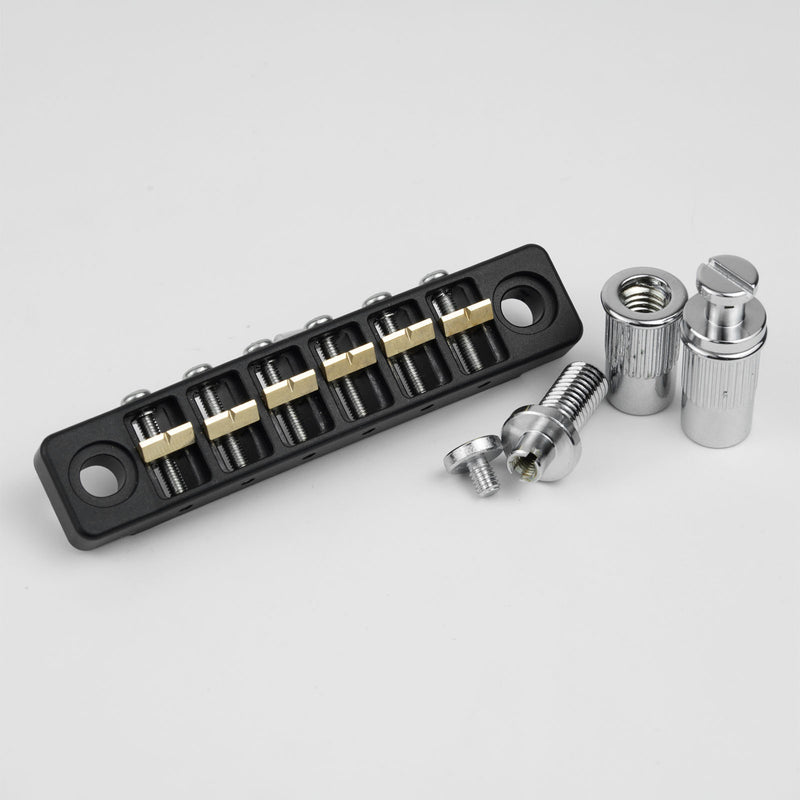
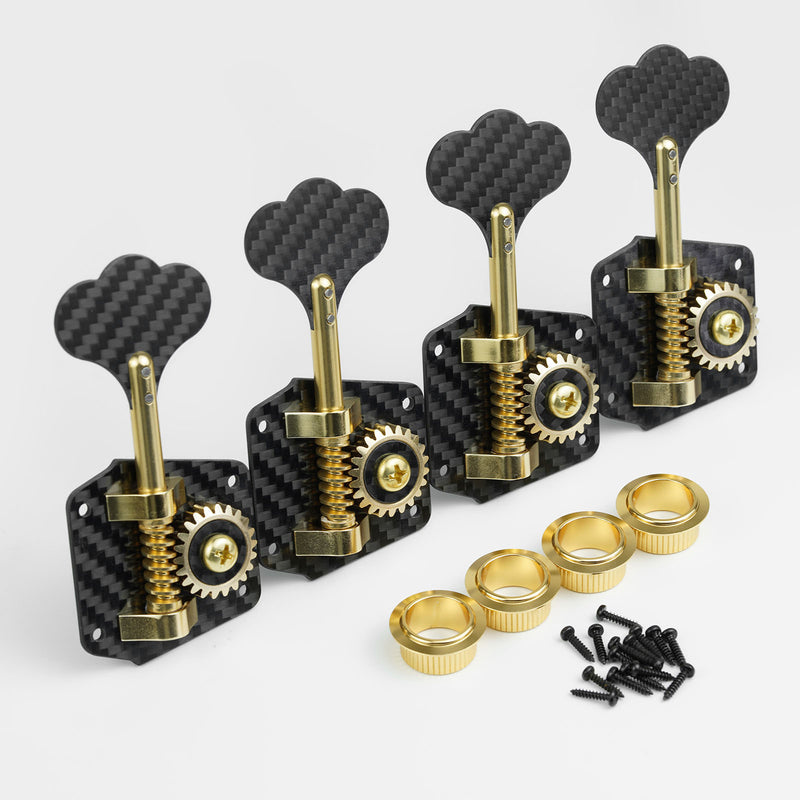
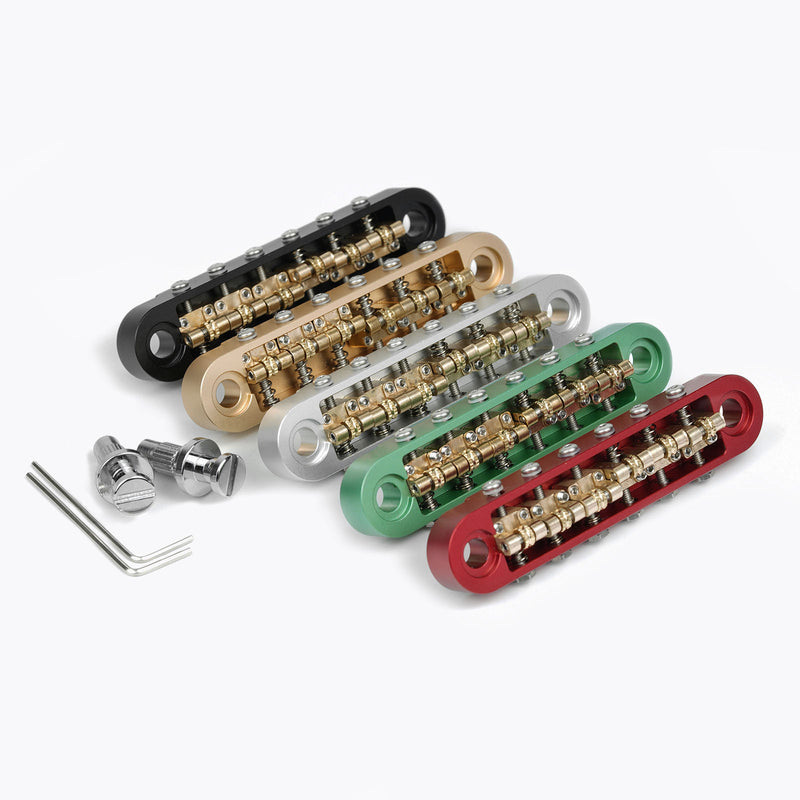
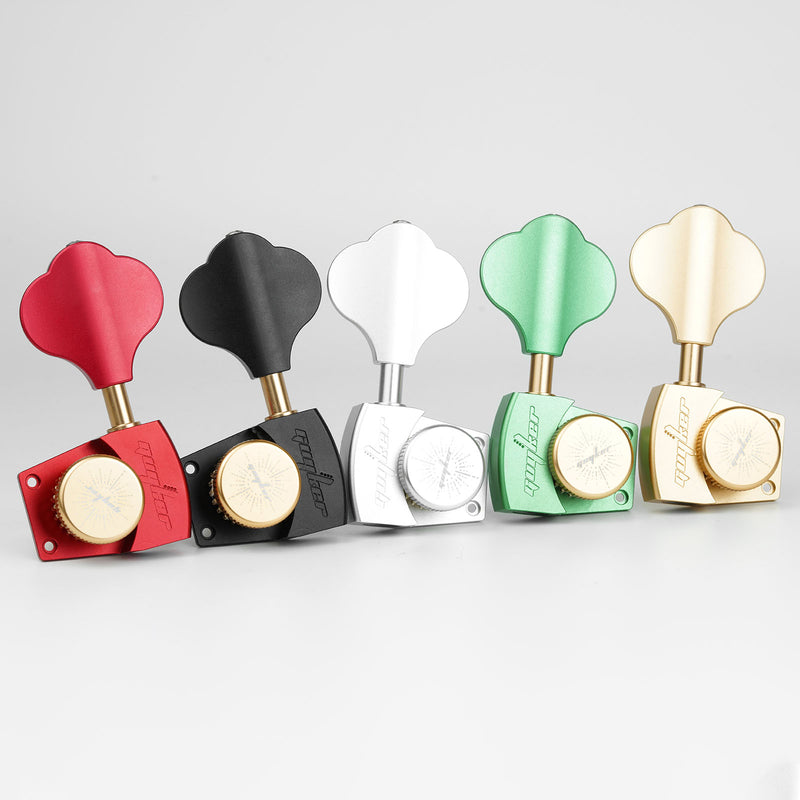
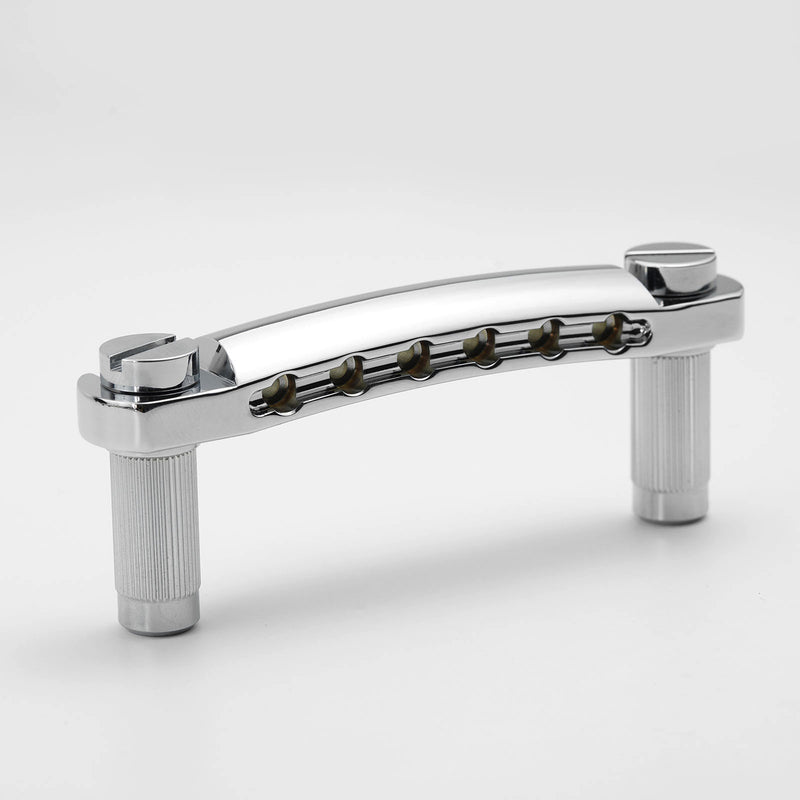
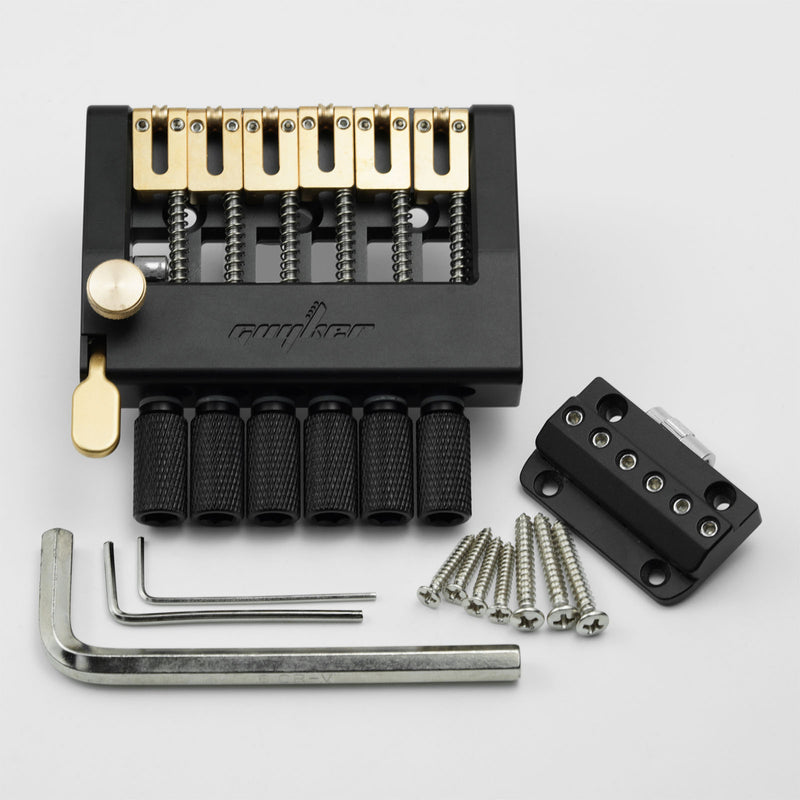
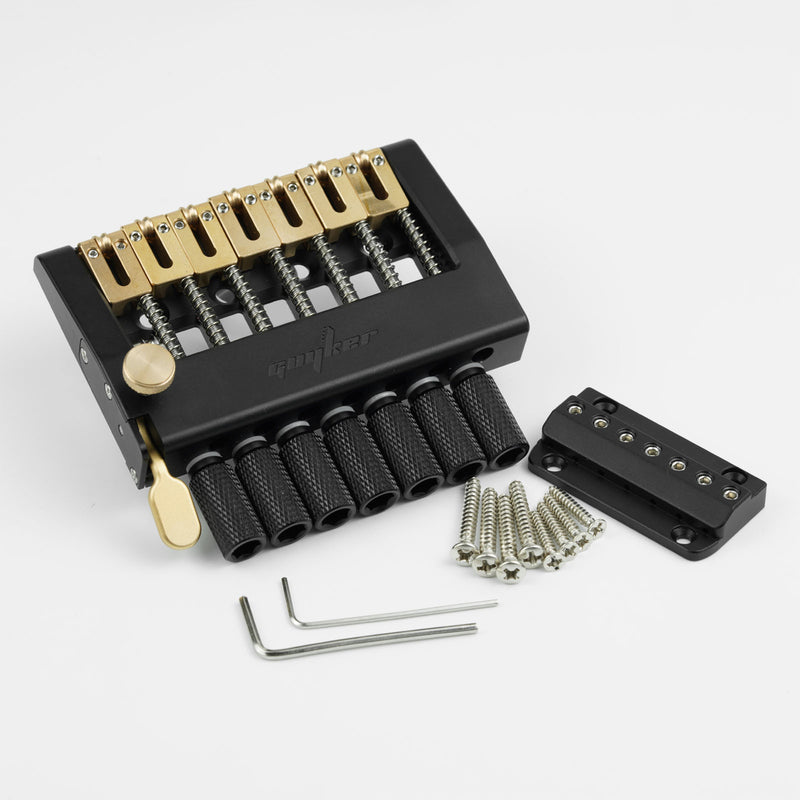
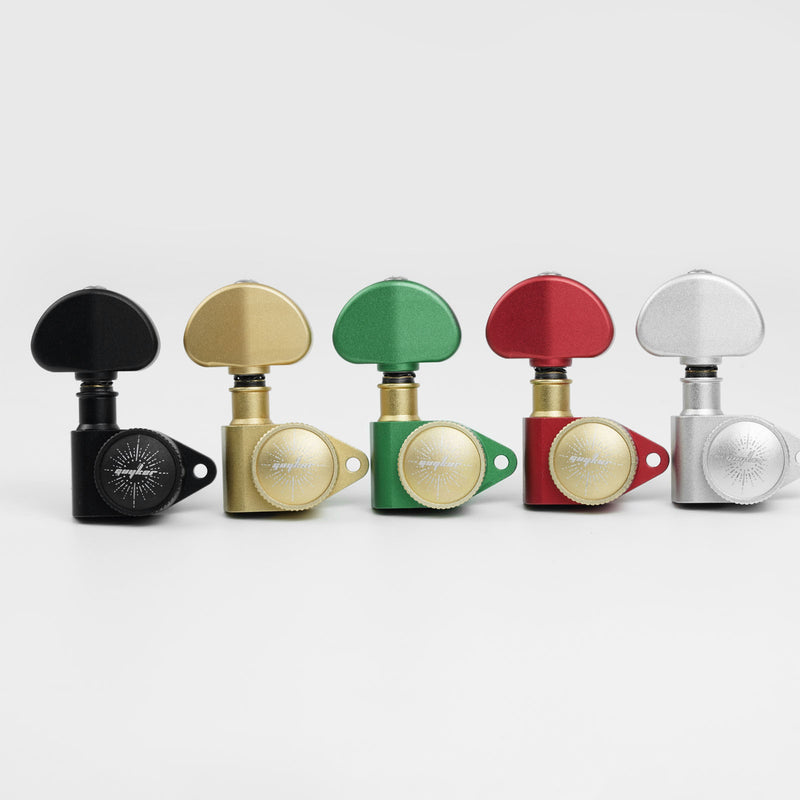
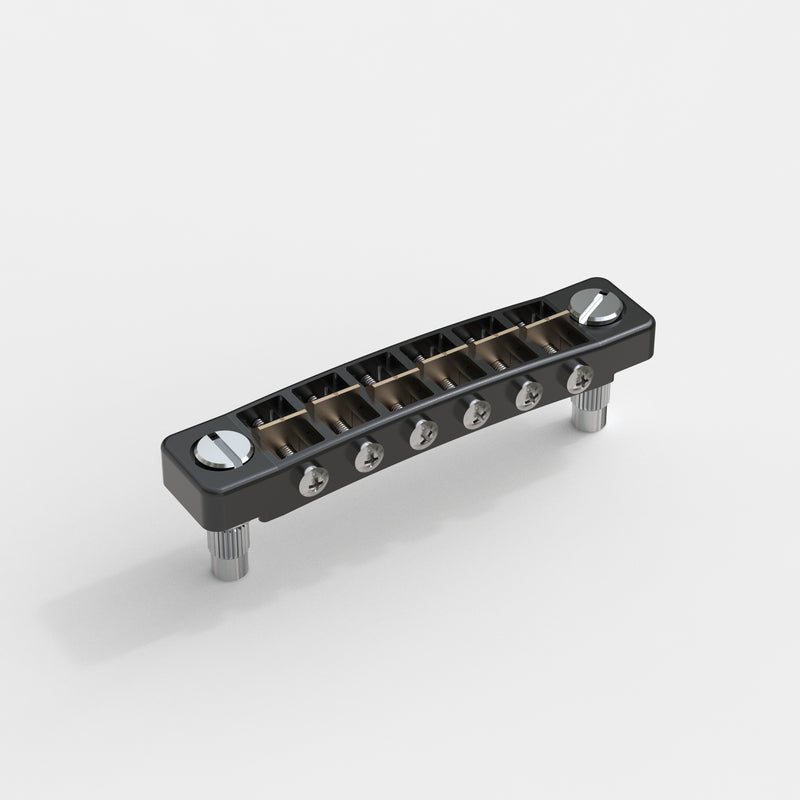
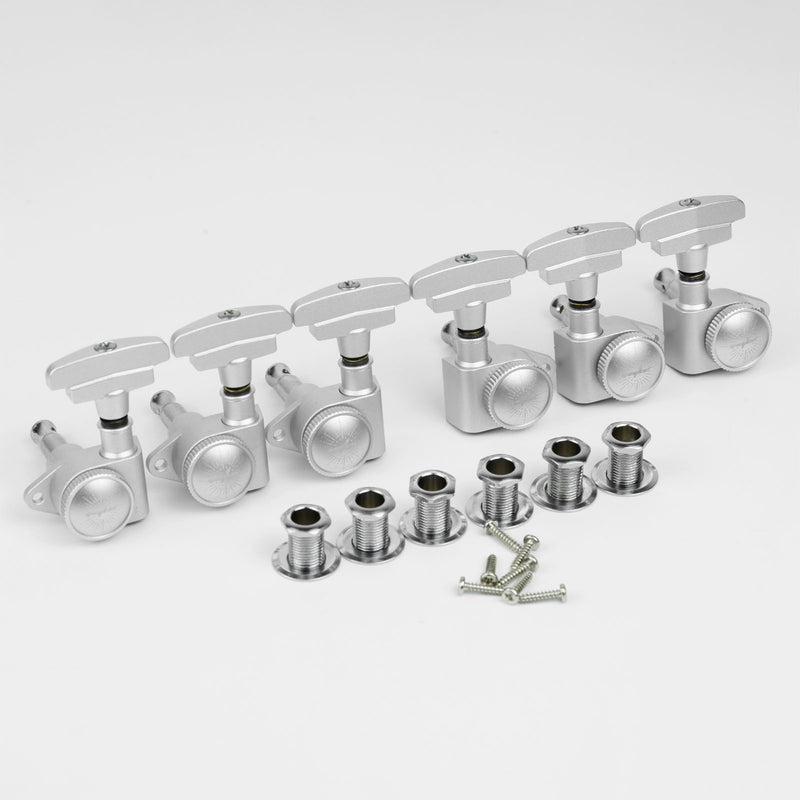
Anodizing colours the aluminum itself, so the palette runs well past the chrome, black and gold plated hardware is limited to.
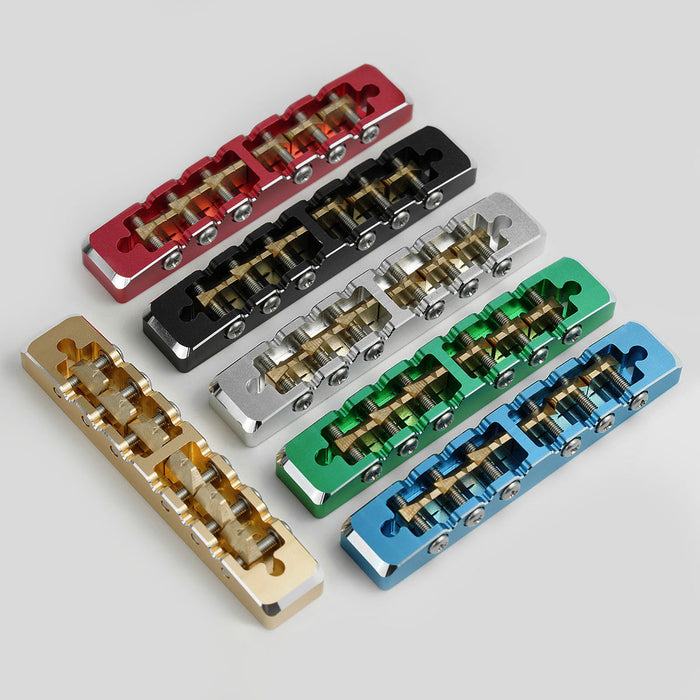
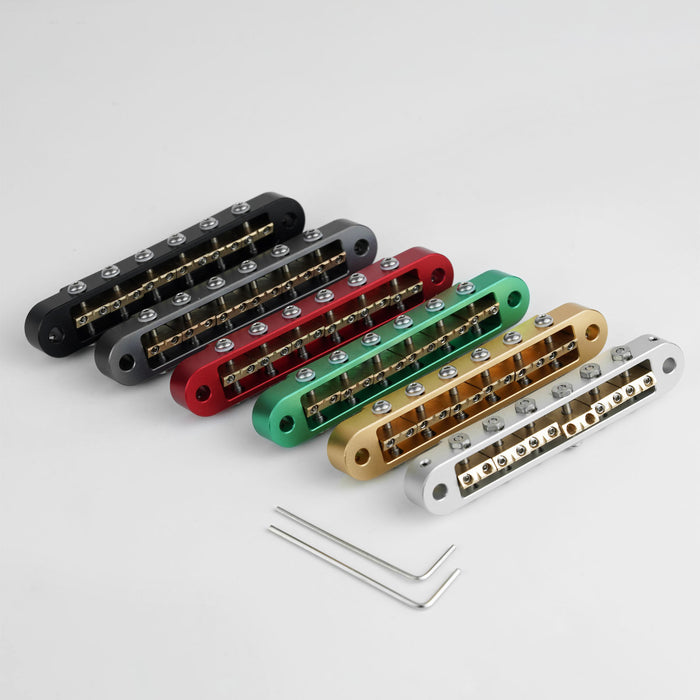
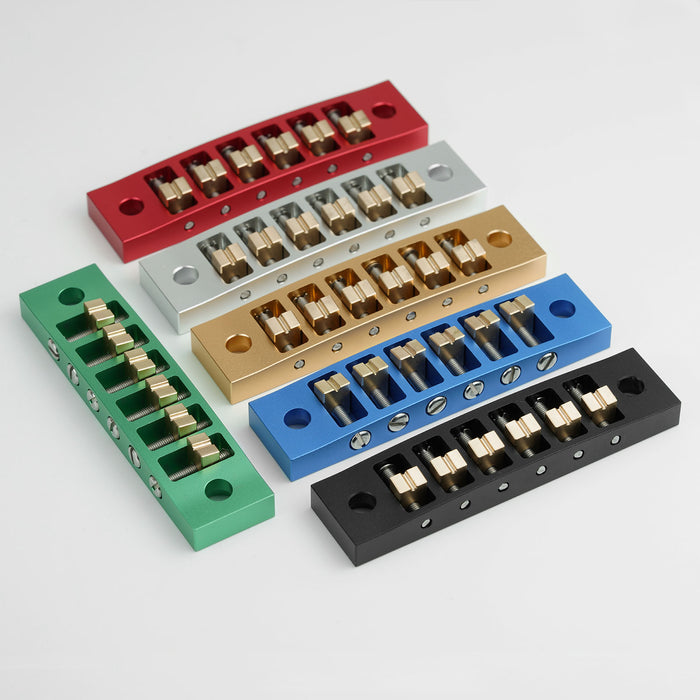
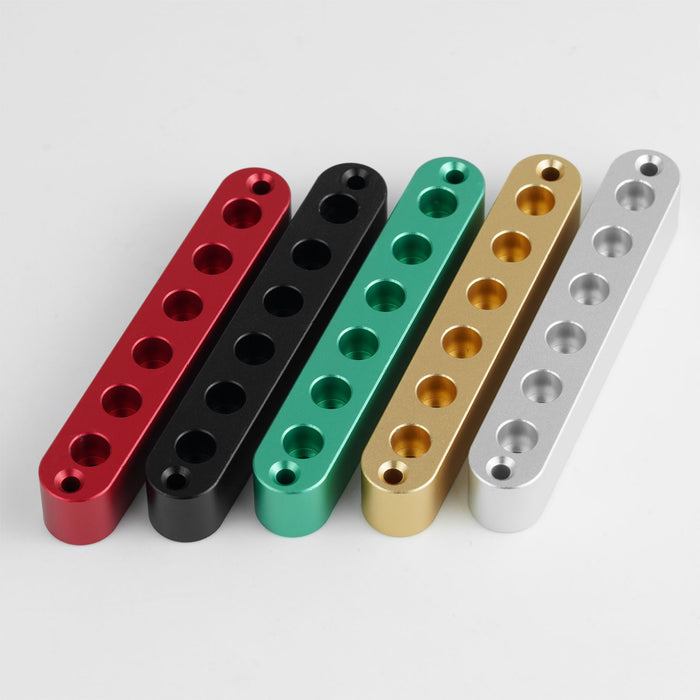
Plated zinc carries its colour in a separate layer that can wear through where your hand rests. Anodizing has no such layer.
Machining from solid aluminum gives us tighter control over dimensions, edges and consistency than conventional die casting.
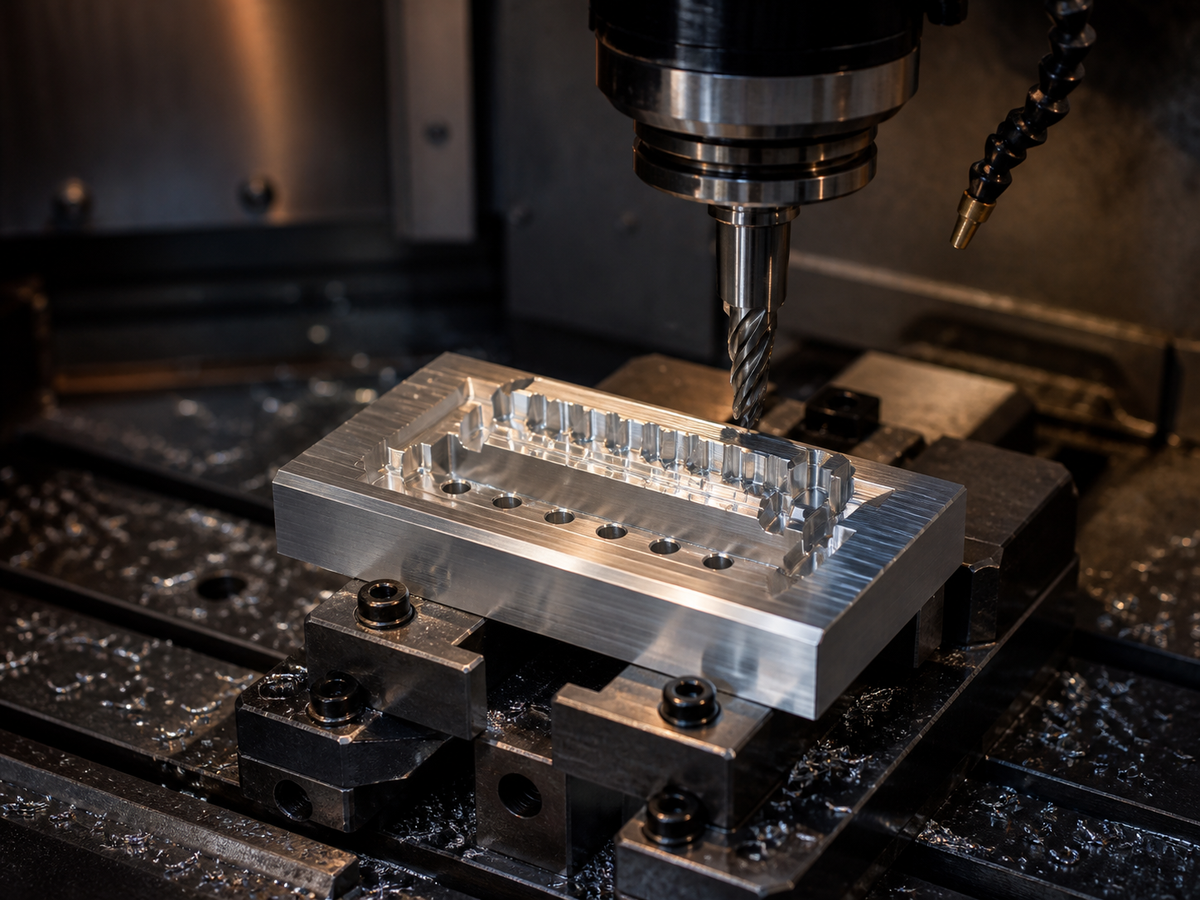
Post spacing, string spacing and mounting holes are cut to spec, so a swap drops in.
The body is one piece of solid aluminum, not a thin wall poured around a void.
Saddle travel is machined into the finished part, so you keep full intonation and height range.
The same program cuts every unit, so the tenth part measures like the first.
Less mass under the strings changes how the guitar responds. Use aluminum when you want the guitar to open up, and stay with zinc when the existing weight is part of what works.
Compare the post spacing, string spacing and mounting dimensions on the product page with your current hardware before ordering.
Yes. These parts are CNC-machined from solid aluminum alloy and designed for normal guitar and bass hardware loads.
Anodizing has no separate plated colour layer to peel. Clean the hardware after playing to extend the finish life.
All finishes age with use, but anodized colour is part of the aluminum surface rather than a separate plated layer.
You can use our 30-day hassle-free return policy, subject to the store return terms.